
Buffalo Grove Garage Door Guide
Knowing When Another Repair Isn't Worth It
Buffalo Grove homes mostly date to the 1980s and 90s, and that era's doors and openers hit a point where repair stops making sense. Here's how to tell.
- Licensed & Insured
- Same-Area Service Calls
- Upfront Pricing
How Local Conditions Play In
Most of the housing stock here went up between 1938 and 2009, with the median landing around 1980, and the bulk of it clustered in that 1980s-to-90s wave that built out so many of the subdivisions in this part of the county. That matters because doors and openers installed during that build-out are now 30 to 45 years old, well past the point where springs, cables, and rollers are wearing on borrowed time rather than normal use. On top of the age, this area sits in a cold, moderate climate band, which means steel doors and standard-lift springs go through real temperature swings every winter.
Cold makes lubricant thicken, metal contract, and old rollers bind in the track. None of that breaks a door on its own, but it speeds up wear that's already there from four decades of cycles. A door that's original to a 1985-built house has usually seen tens of thousands of open-and-close cycles, plus every freeze-thaw season since.
When a homeowner calls about a noise or a slow close, the first question worth asking isn't just what's wrong today - it's how many more winters that hardware has left in it.
What Most People Get Wrong
The common mistake is treating each repair as an isolated fix instead of a symptom of the door's age. A homeowner replaces a broken spring, then six months later a cable frays, then a roller seizes in cold weather - each job gets paid for separately, as if unrelated. On a door original to the 1980s-90s wave of construction that's common in this area, those aren't unrelated.
They're the same 40-year-old track and hardware failing one part at a time. Another mistake: assuming a working opener means the door is fine. Openers and doors wear on different clocks - a newer opener bolted to original 1980s track and rollers is still fighting worn hardware every cycle, and it will burn out faster for it.
People also underestimate what cold does to old torsion springs; a spring rated for a certain cycle count doesn't get an exception because it's been mild the last few winters. It's still counting down.
What Is Going On
When you're stacking repairs on a door that's original to a house built in that 1980-ish median range, you're not fixing a door anymore - you're patching a system that was engineered to a lifespan, and that lifespan is behind it. Track that's decades old has usually stretched or misaligned slightly at the joints, which puts uneven load on rollers and cables even after you replace them. A spring swap on old track often reveals the rollers are next, and the rollers reveal the hinges are cracked, and each of those parts costs a service call.
The honest tell is frequency: if you've called for a repair on the same door twice in a year, or three times in two years, you're past the point where one more fix solves anything. The other tell is the panels themselves - steel doors from that era dent and rust at the bottom panel from decades of winter salt and moisture exposure in this climate, and a new opener or spring bolted to a rusting frame doesn't buy you much time.
Leaving It Alone
Here's the limitation worth saying plainly: we don't push replacement on every older door that comes through a service call. A 1990s door with a single failed spring and otherwise sound track and panels is a legitimate repair, not a sales opportunity, and we'll say so on site. What we won't do is keep billing you for parts on a door whose track, hinges, and panels are all failing at once - at that point a repair quote starts approaching replacement cost anyway, and you're paying twice.
If your door is original to a home built in that 1980s-90s range and you've had more than one repair call in the past year, ask us for a straight answer on whether the next fix is worth it before you book it. Sometimes the right move really is one more spring. Sometimes it isn't, and a cold winter is a bad time to find out the hard way with a door that won't close.
How We Can Help
Garage Door Repair
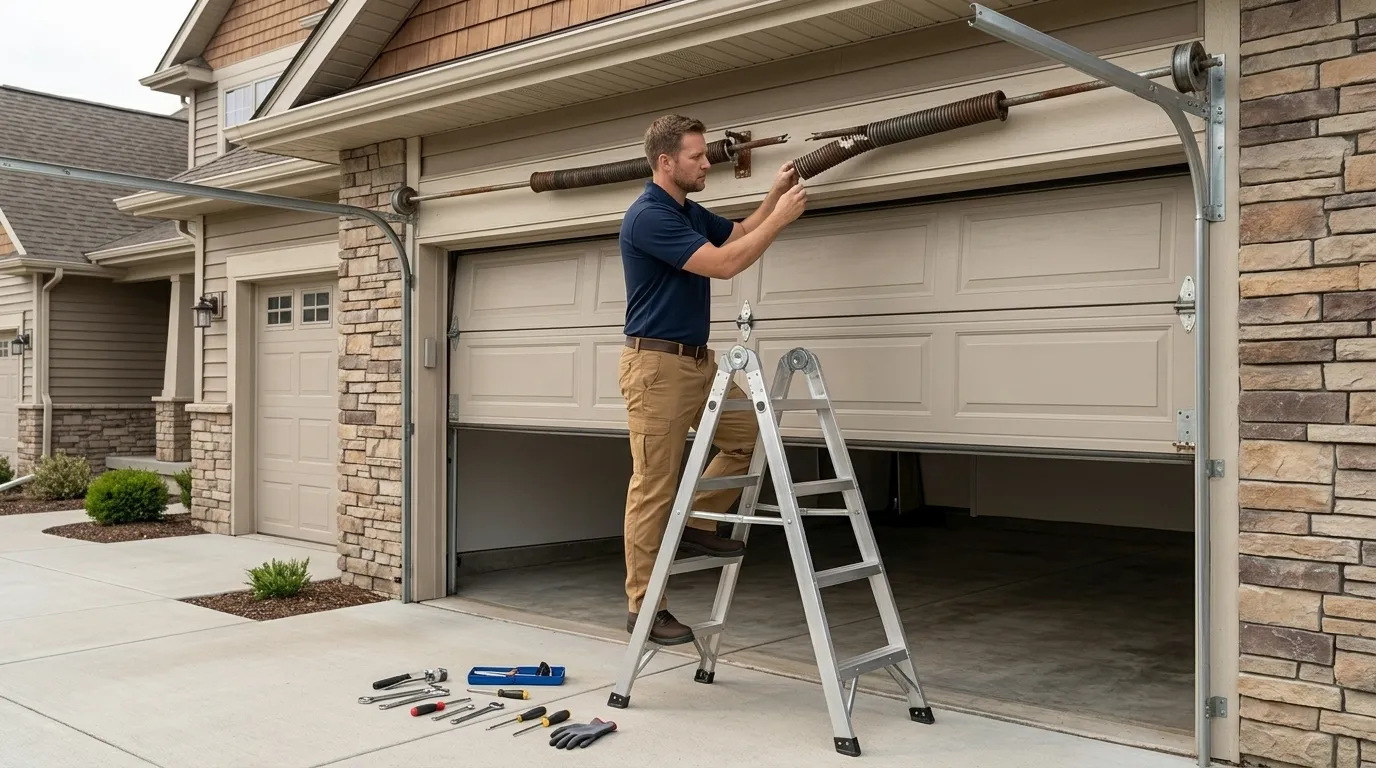
Springs, cables, tracks, rollers, and openers fixed by a tech who explains the problem before touching anything.
Learn more →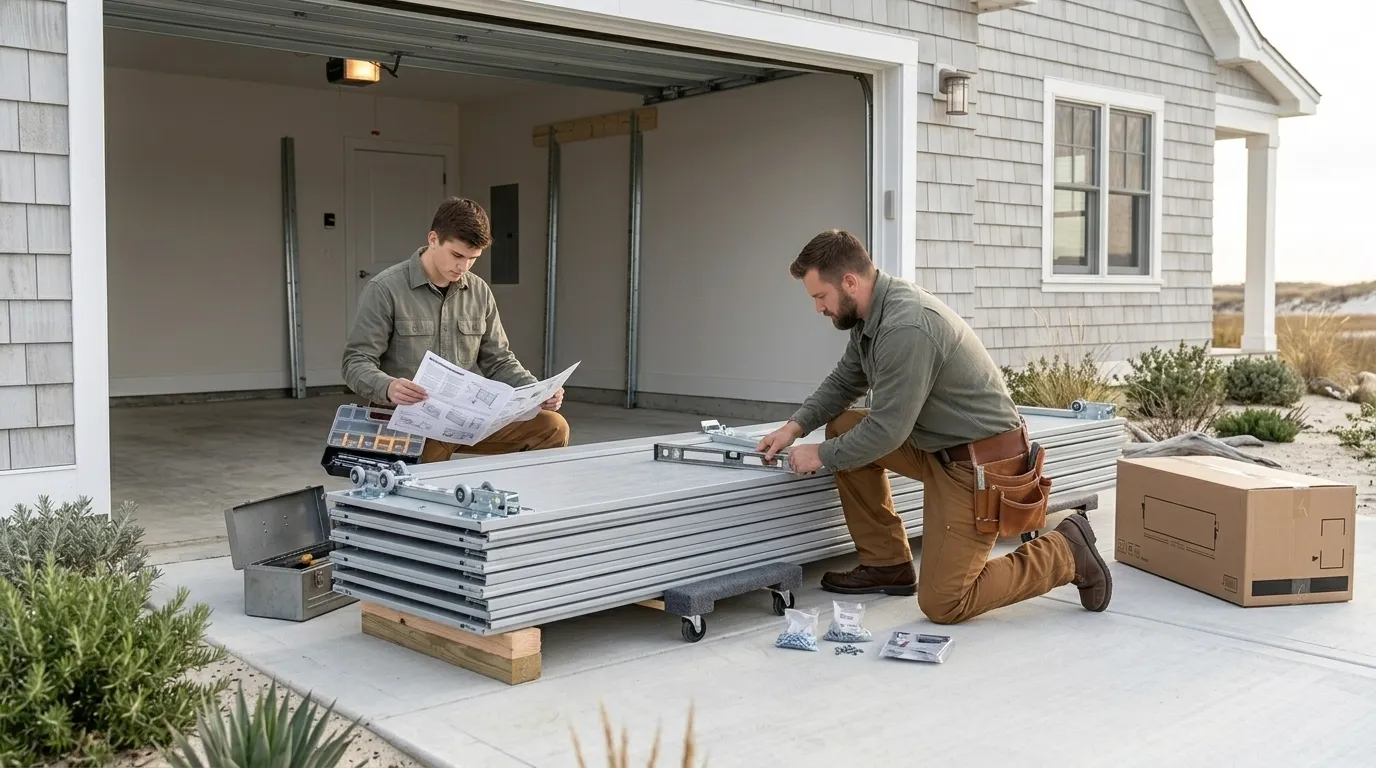
Garage Door Installation
New sectional doors sized and installed for the housing stock actually built in this area.
Learn more →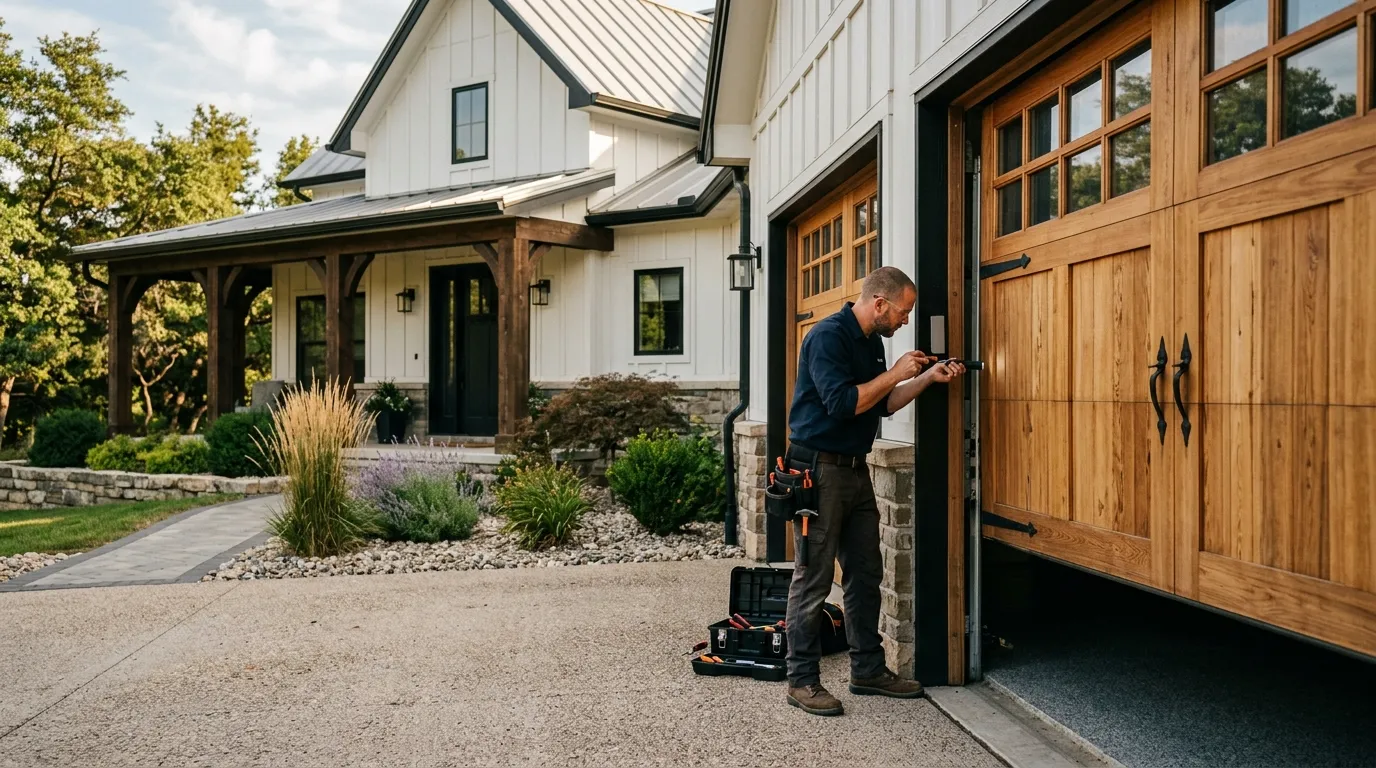
Garage Door Service
Tune-ups, lubrication, and safety checks that catch a small problem before it becomes a service call.
Learn more →Frequently Asked Questions
My garage door is original to a house built in the 1980s. Is it too old to repair?
Not automatically. Age alone doesn't rule out a repair - a single worn part on otherwise sound track and panels is often a fair fix. The concern is when multiple systems (springs, rollers, track, panels) are failing around the same time, which is common on doors from that era given the cycle count and decades of cold-weather use.
Why does my old garage door act up more in winter?
This area sits in a cold, moderate climate band, and cold thickens lubricant, contracts metal, and makes worn rollers bind in the track. A door in good shape shrugs this off. A door with decades of wear already on it, common in homes built in the 1980s-90s wave here, tends to show problems first in the cold months.
How do I know if I should replace instead of repair again?
If you've had more than one repair call on the same door within a year or two, that's usually the signal. It means the track, hardware, or panels are wearing out together, not one isolated part. At that point, ask for a straight comparison between the next repair's cost and full replacement before booking the work.
Have a Door That Needs a Second Opinion?
Call and describe what it is doing - we will tell you what it likely is.