
Buffalo Grove Garage Door Guide
Why Garage Door Seals Wear Out Fast in Buffalo Grove
Buffalo Grove homes built between 1938 and 2009 rely on aging weather seals that fail in cold winters. Here's what actually causes draughts and worn seals.
- Licensed & Insured
- Same-Area Service Calls
- Upfront Pricing
How Local Conditions Play In
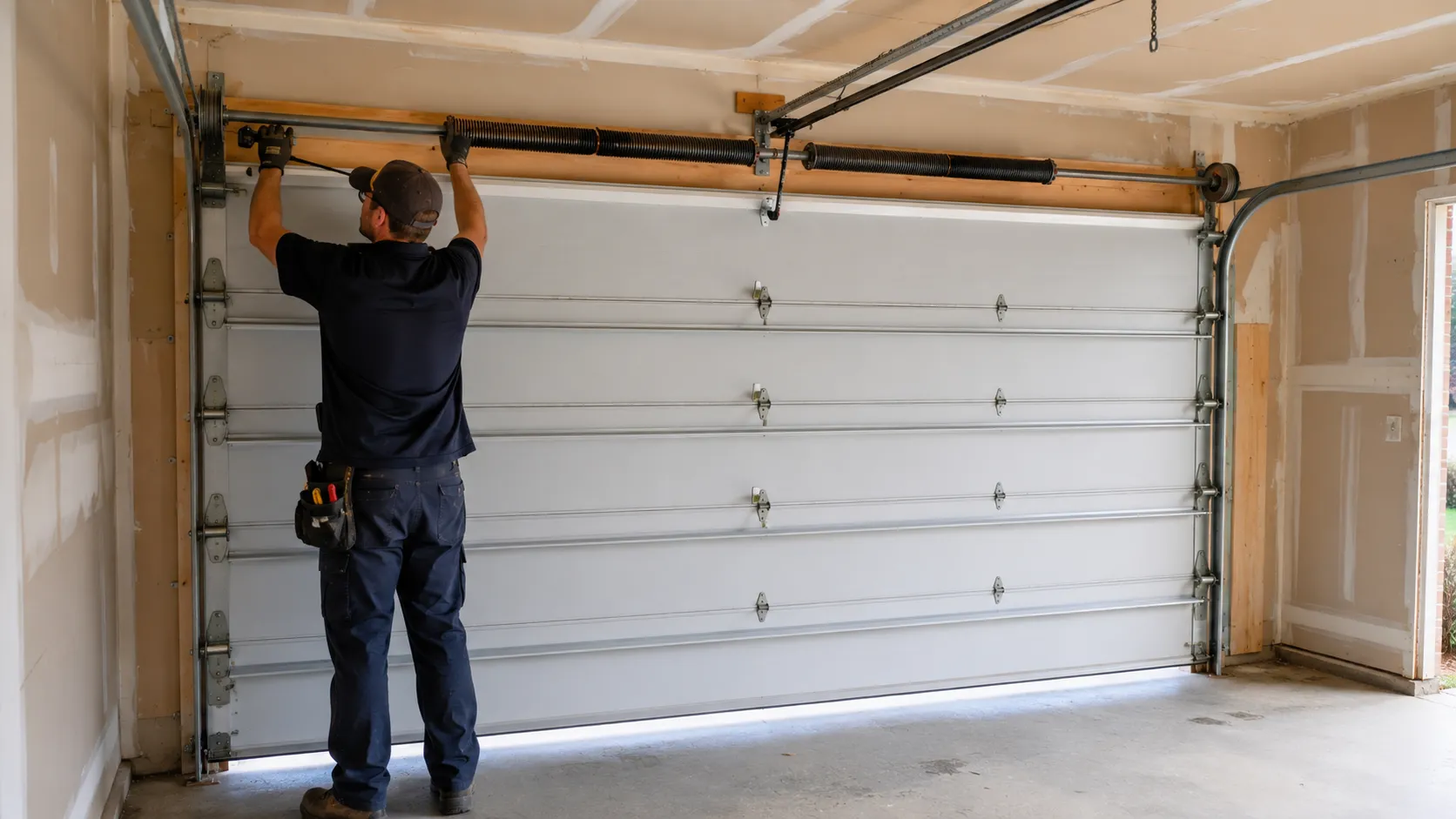
Most of the housing in this service area went up between 1938 and 2009, and the bulk of it - across the 79 named neighborhoods we work in - dates to the 1980s and 90s. That matters for one reason: the vinyl bottom seal and side weatherstripping on a door from that era were never meant to last forty years. They were meant to last ten, maybe fifteen, before someone replaced them.
This area sits in a cold-moderate climate band, which is a different kind of wear than what a seal sees somewhere warmer. Heat breaks vinyl down through UV exposure and softening.
Cold does something worse for the material: repeated freeze-thaw cycling makes it brittle, then it cracks at the exact spots where it flexes every time the door opens and closes. A seal that looks intact in July can be splitting at the corners by February.
So when a homeowner in a 1985-built house calls about a draught along the bottom of the door, the age of the house and the winters it's been through both point to the same likely cause before we even look at the door in person.
What Most People Get Wrong
The usual assumption is that a cold draught under the garage door means the garage itself is poorly insulated, or that something's wrong with the opener sensing the gap and not closing all the way. Neither is usually it.
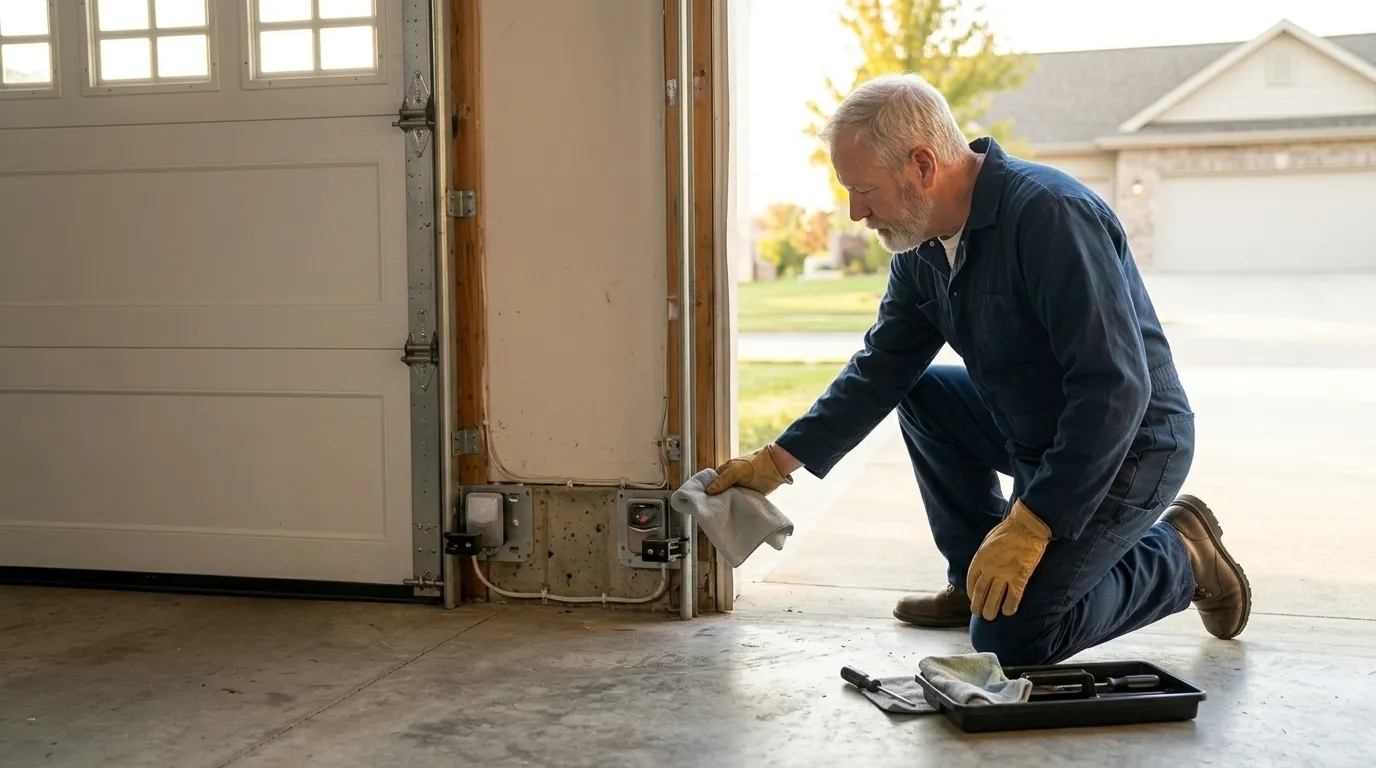
What's actually going on, in a lot of these older houses, is a bottom seal that's compressed flat, cracked, or pulled loose from the retainer track, plus perimeter weatherstripping along the sides and top that's gone stiff and no longer sits flush against the jamb. A door can look fully closed and still leave a quarter-inch gap running the length of one side. On a house built in the 1980s or 90s, that seal has had three or four decades of freeze-thaw cycles to work on it, and vinyl doesn't recover from that - it just keeps shrinking and hardening.
The other thing people get wrong is thinking a draught is only a comfort issue. In a cold-moderate climate, a gap that size lets in enough outside air to matter to a heating bill, and it's often the entry point for the cold snap that also affects anything stored against that wall.
What Is Going On
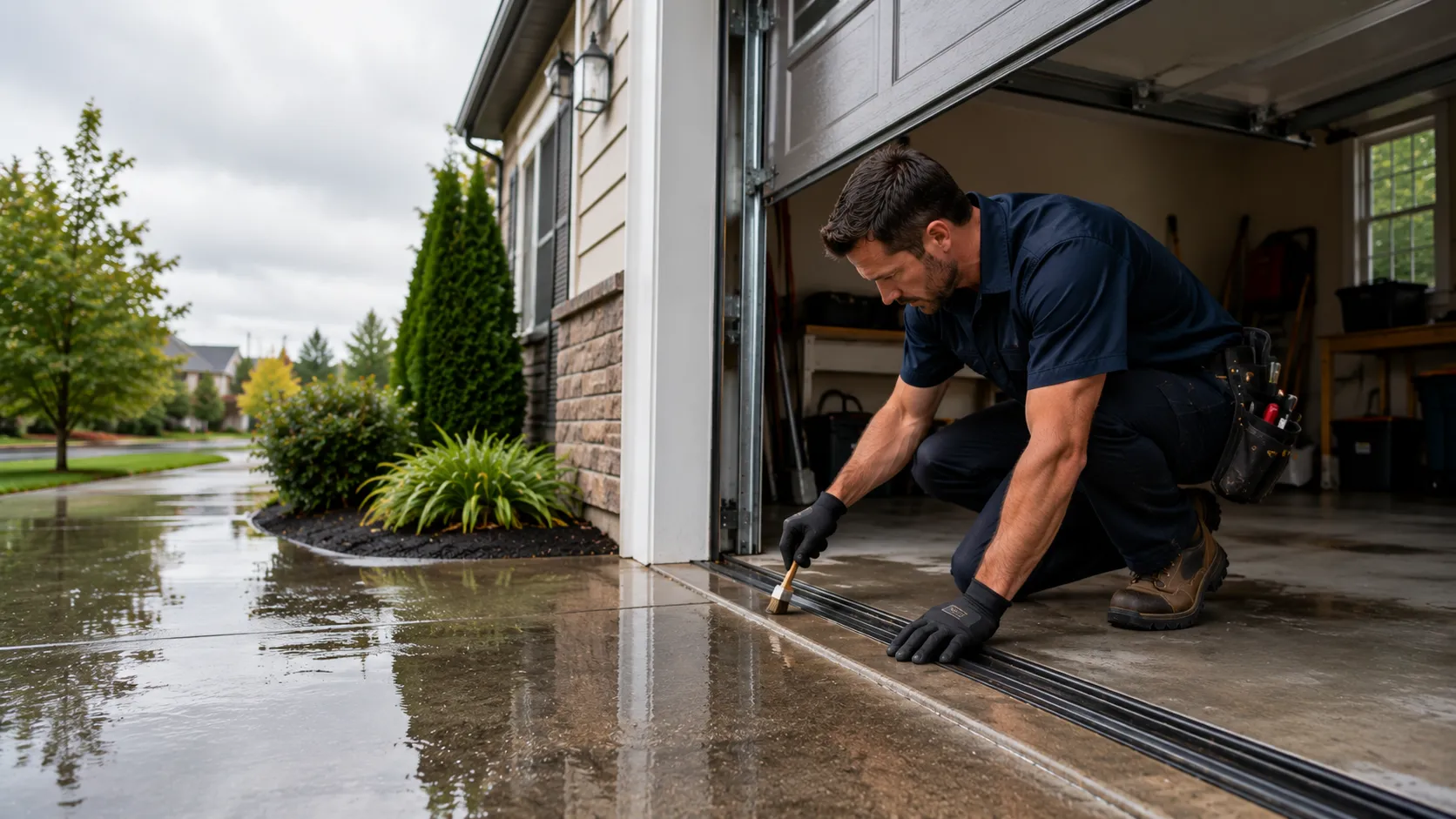
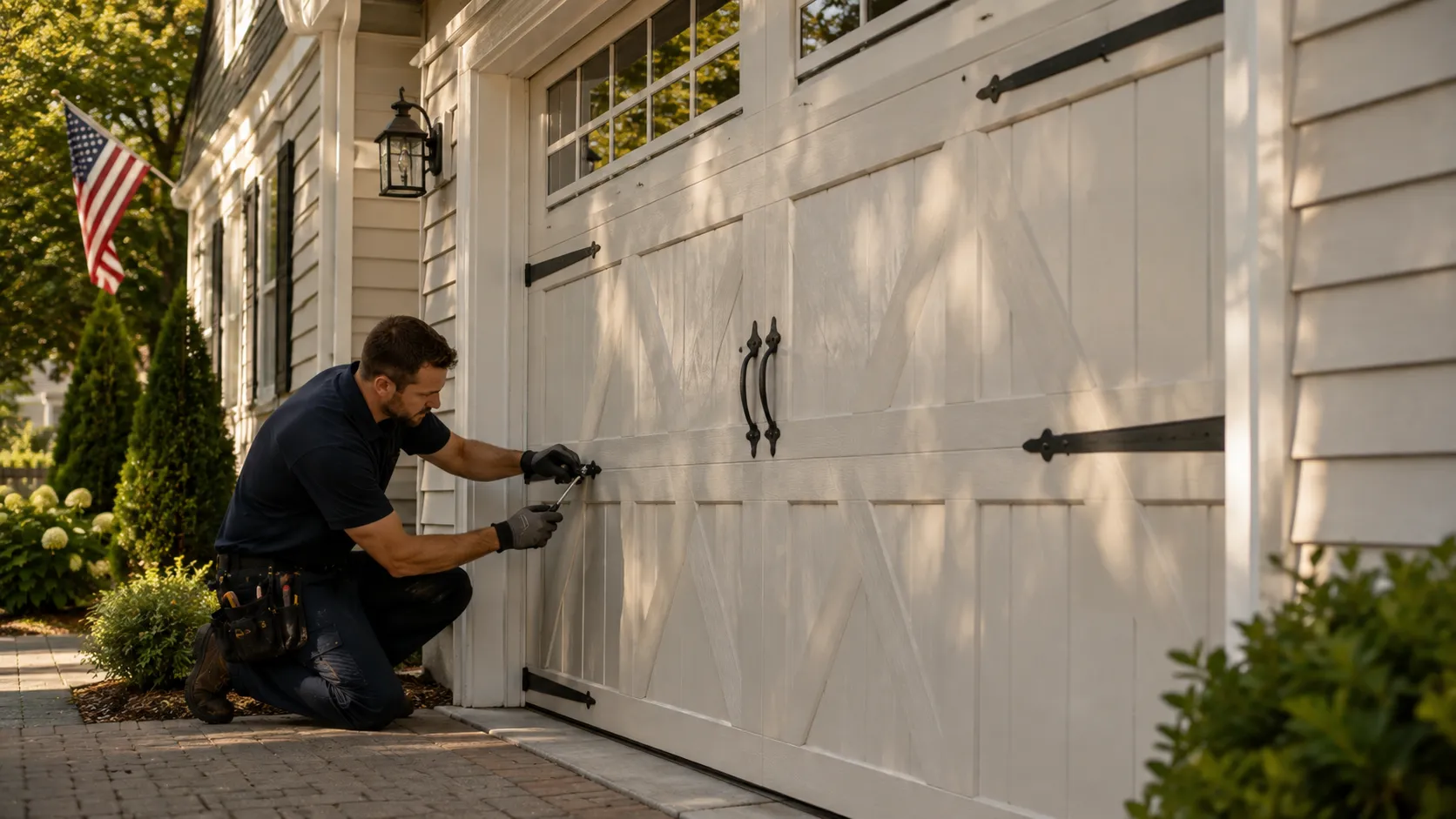
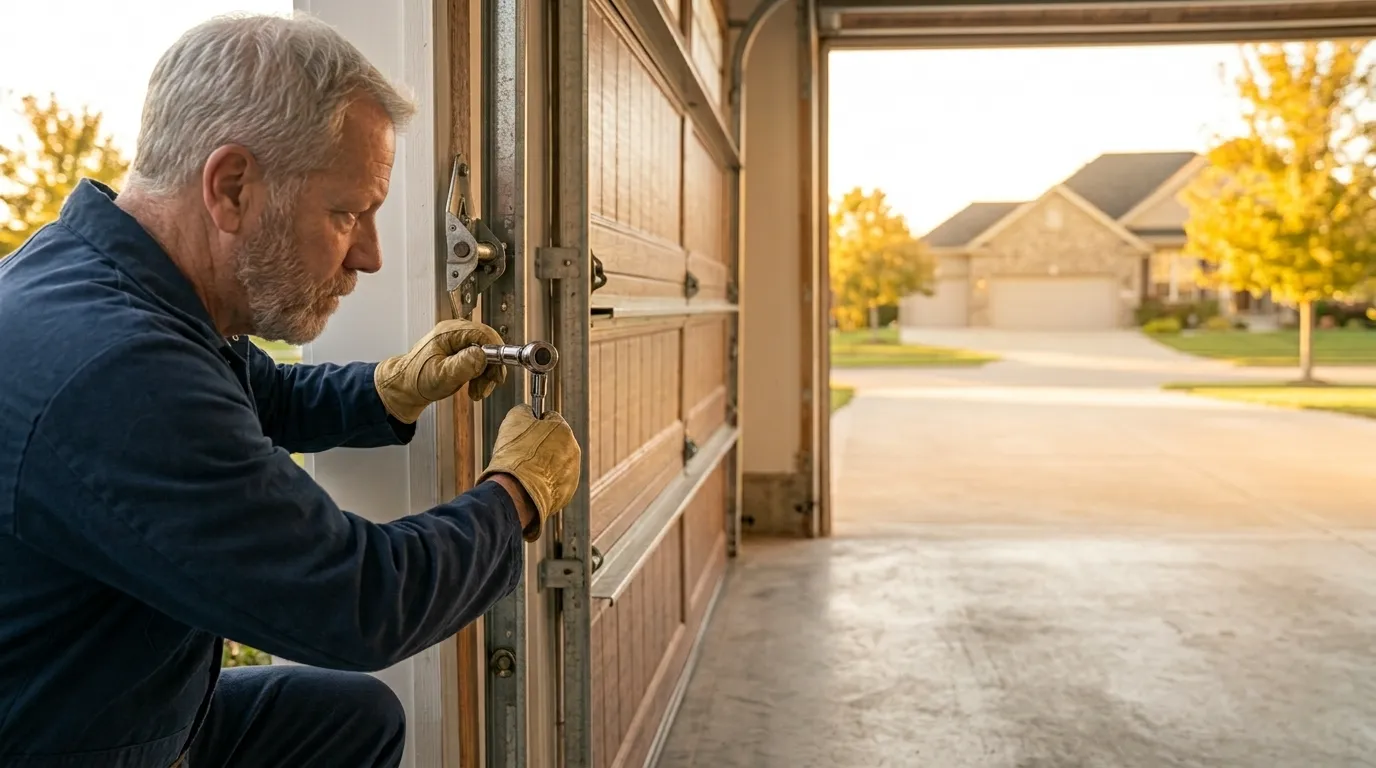
Two separate seals are usually involved, and it's worth knowing the difference. The bottom seal is the strip set into a track along the door's lowest panel - that one takes the most physical abuse because it hits the floor every cycle. The perimeter weatherstripping runs along the two sides and the top of the frame and seals against the door face rather than the floor.
On houses from the 1980s and 90s stock that makes up most of this area, both of these are frequently still the originals, or a first replacement that's now old itself. Cold makes vinyl lose flexibility, so instead of compressing evenly when the door shuts, it either doesn't compress at all in the cracked spots, or it's shrunk enough that it no longer reaches the full width of the track. Either way, you get a visible line of daylight or a hand-felt draught, usually worse at the corners where the seal is under the most stress.
We check both seals separately, because a door with a perfect bottom seal can still draught badly through worn top and side weatherstripping, and replacing the wrong one doesn't fix anything.
Leaving It Alone
A cracked seal isn't an emergency, and we'll say that straight - it won't strand your car in the garage the way a broken spring will. But in a cold-moderate climate, ignoring it costs you steadily rather than all at once: higher heating bills if the garage is attached and shares a wall with living space, a cold slab that makes anything stored there - paint, some tools, a second fridge - sit at outdoor temperature most of the winter, and an open path for whatever wants in out of the cold.
Here's the honest limitation: a new seal only fixes a seal problem. If the draught is coming from a warped panel, a door that's out of square on its tracks, or a threshold that's settled and no longer level with the floor, swapping the weatherstripping buys you a few months before the gap reappears.
On a house built in the 1980s that's had one settling season too many, the track alignment is sometimes the real issue, and that's a different job. We'd rather tell a homeowner that up front than sell a seal that won't hold.
How We Can Help
Garage Door Repair
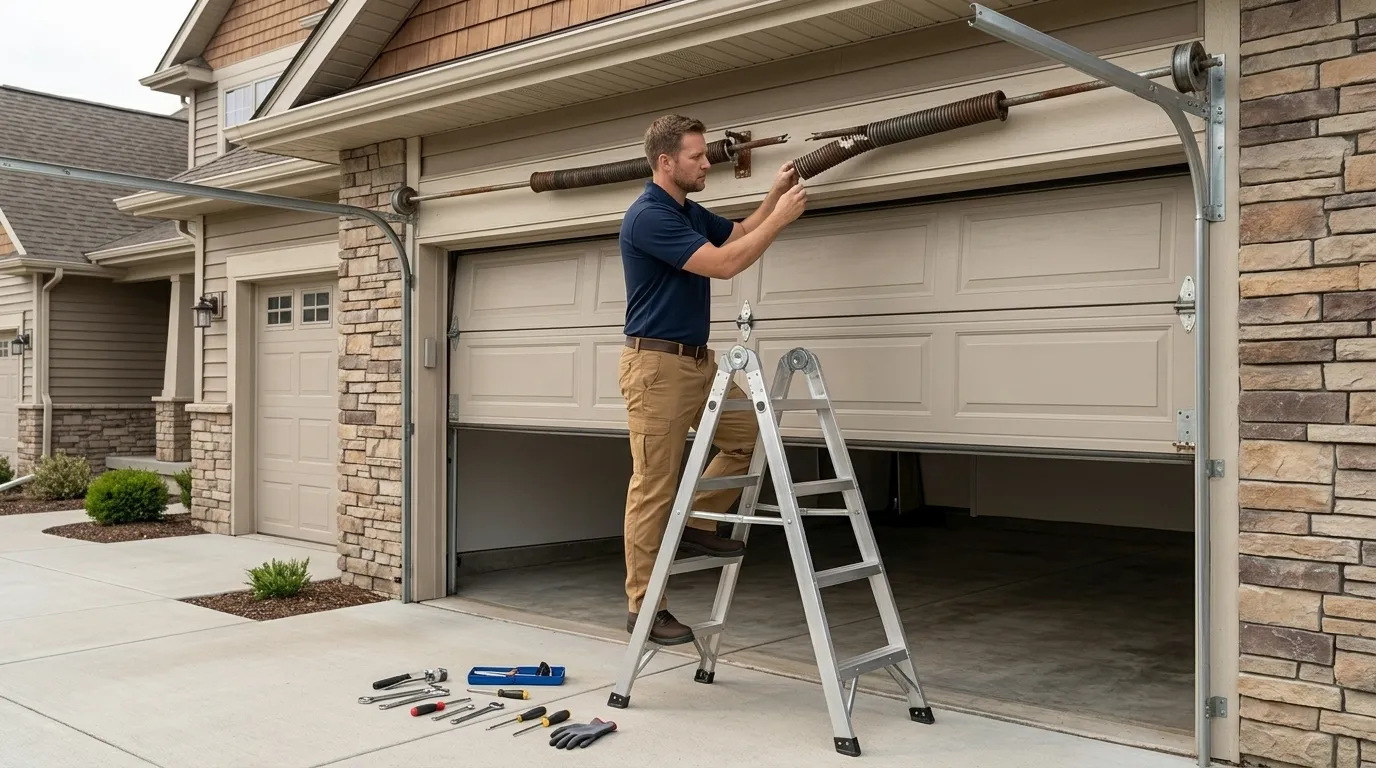
Springs, cables, tracks, rollers, and openers fixed by a tech who explains the problem before touching anything.
Learn more →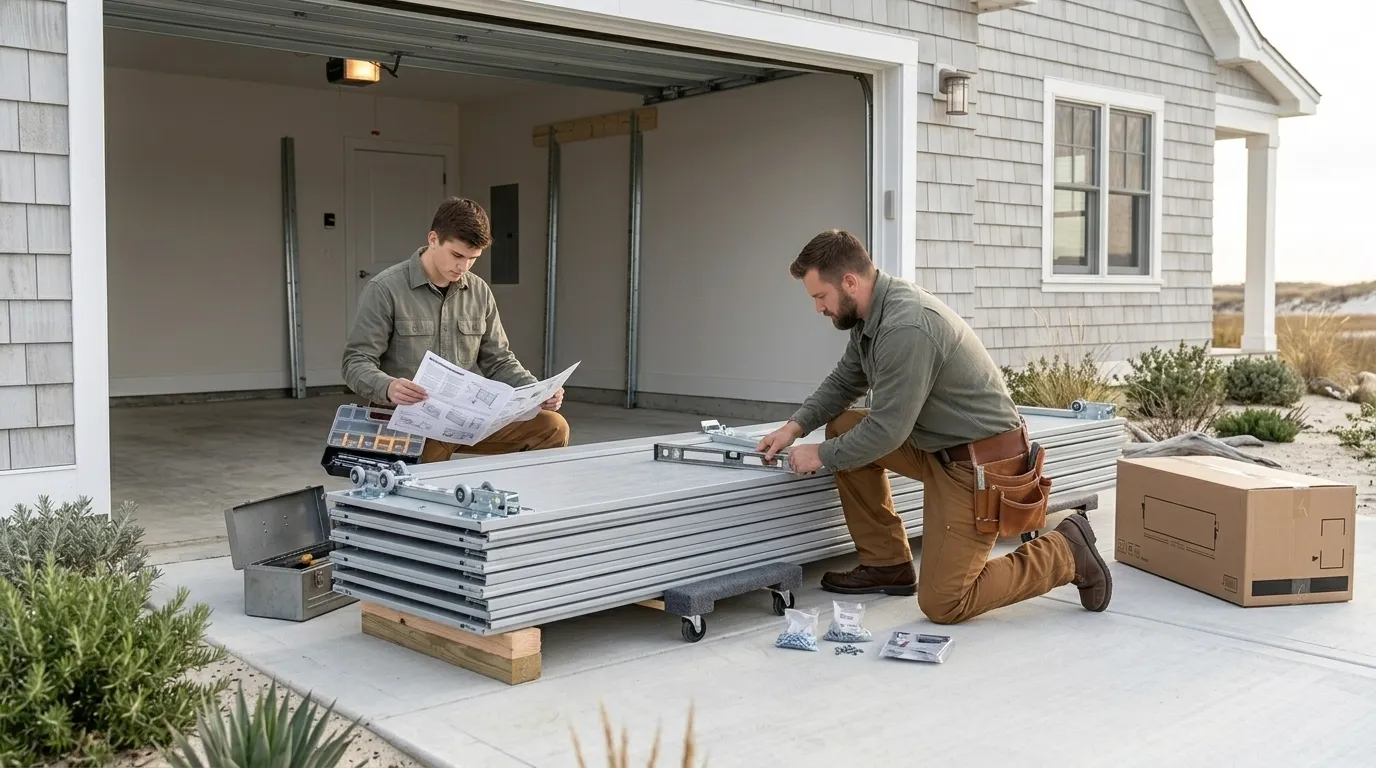
Garage Door Installation
New sectional doors sized and installed for the housing stock actually built in this area.
Learn more →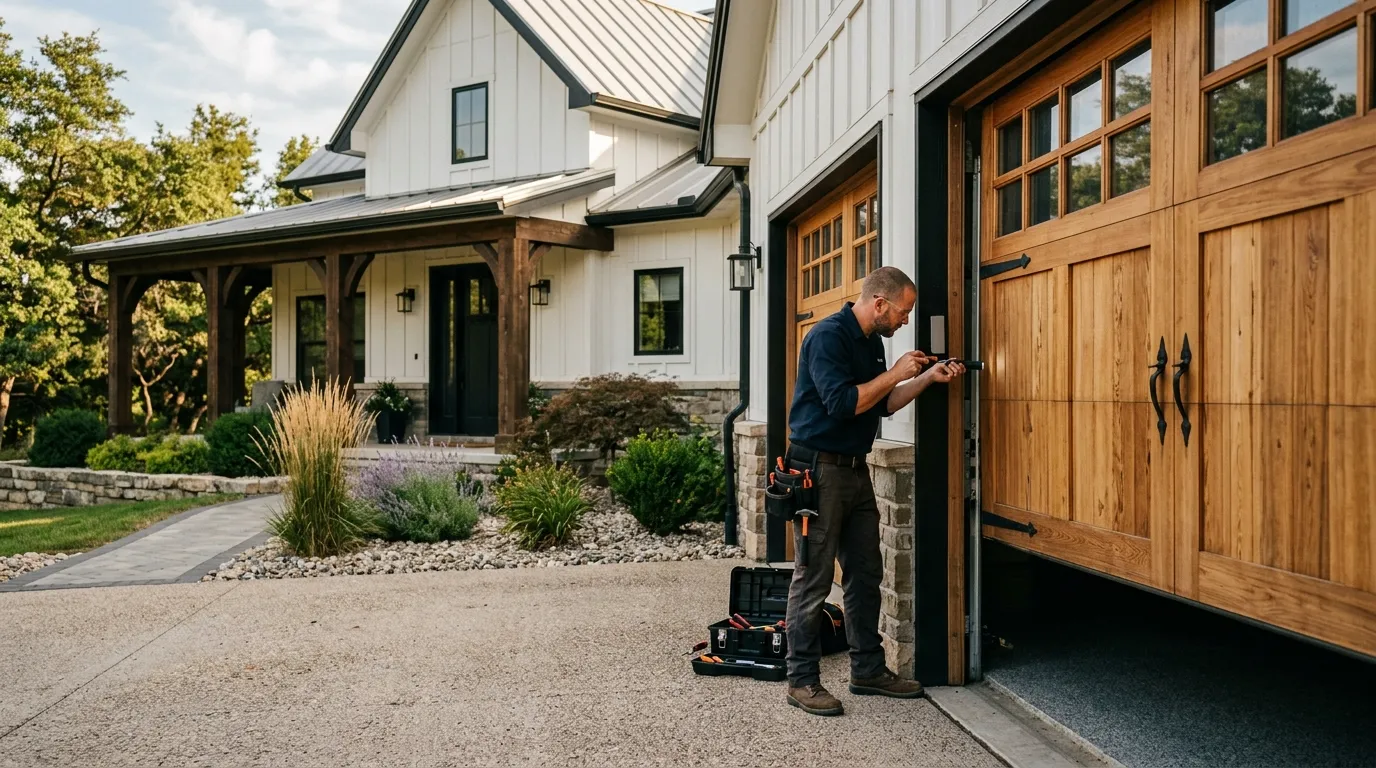
Garage Door Service
Tune-ups, lubrication, and safety checks that catch a small problem before it becomes a service call.
Learn more →Frequently Asked Questions
How often should I replace the bottom seal on my garage door?
There's no fixed schedule, but in this climate a vinyl bottom seal on a house from the 1980s or 90s stock common here has usually had multiple freeze-thaw winters to work on it. Check it each fall: press a thumb into it. If it feels stiff or shows hairline cracks at the folds, it's past due, regardless of how many years have passed.
Is a draught under my garage door actually costing me money?
In a cold-moderate climate, yes, if the garage is attached to living space or shares a wall with a room you heat. A gap the width of a pencil running the length of the door lets outside air move through steadily all winter, which is a different and more constant loss than a single drafty window.
Can I just add more weatherstripping instead of replacing the old seal?
Layering new strips over cracked vinyl usually just hides the gap for a short while rather than closing it, since the old material keeps shrinking underneath. On older doors it's usually cheaper in the long run to pull the brittle seal out of the track and put in a full replacement.
Have a Door That Needs a Second Opinion?
Call and describe what it is doing - we will tell you what it likely is.