
Buffalo Grove Garage Door Guide
Cold Weather and a Broken Spring: What's Really Happening in Buffalo Grove
Buffalo Grove homes built mostly between 1938 and 2009 carry springs rated for cycles cold snaps cut short. Here's what actually happens and what to check first.
- Licensed & Insured
- Same-Area Service Calls
- Upfront Pricing
How Local Conditions Play In
Buffalo Grove sits in a cold, moderate climate band, and that matters more for garage door springs than most homeowners realize. Metal doesn't like sudden temperature swings.
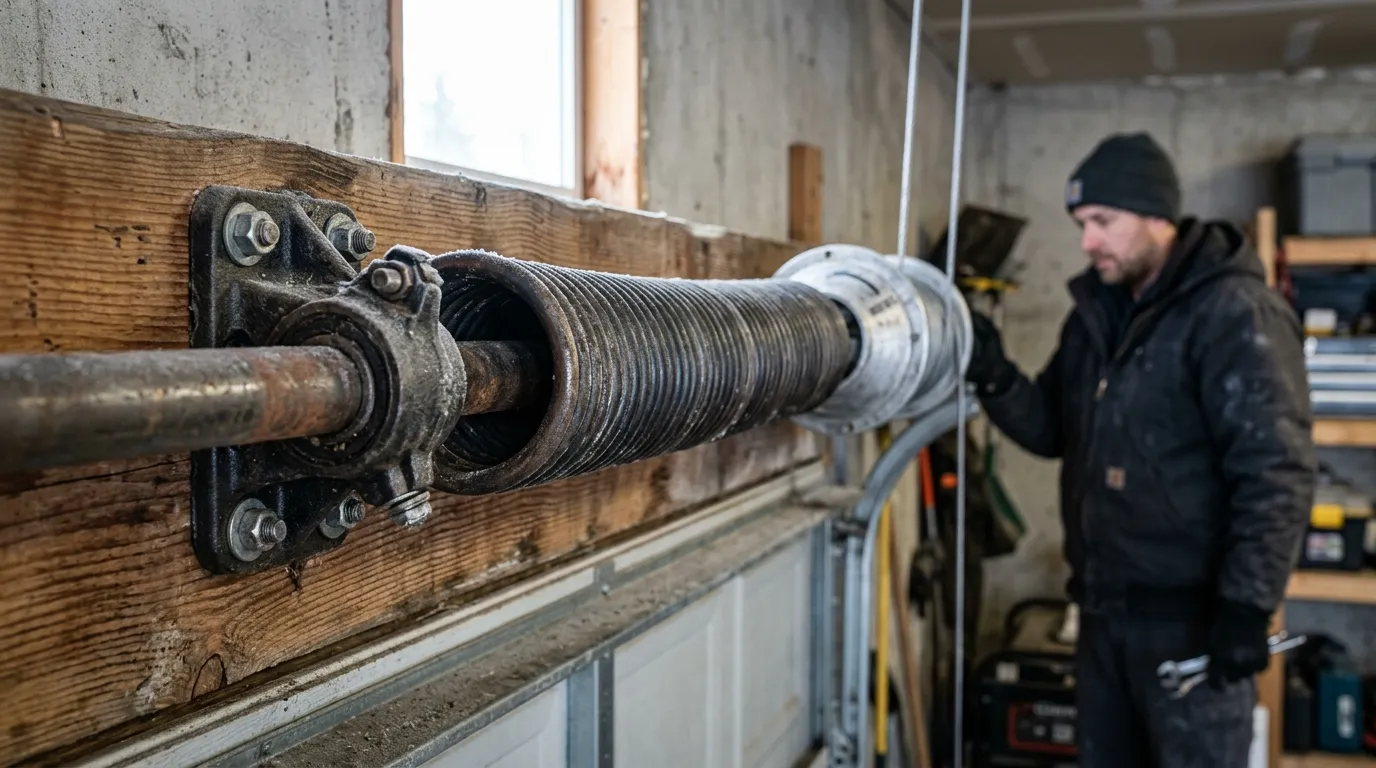
A torsion spring that's been winding and unwinding for fifteen or twenty years builds up internal stress with every cycle, and steel gets more brittle as the temperature drops. It's not the cold alone that breaks a spring - it's the cold arriving right when a spring is already near the end of its rated life.
Most of the housing stock here went up between 1938 and 2009, with a median build year around 1980, and a good chunk of that is 1980s and 90s construction. That means a lot of Buffalo Grove garages are still running original or first-replacement springs installed decades ago. Those springs were fine in mild weather for years.
Add a hard overnight freeze and the same spring that opened the door yesterday can snap on the next pull. This isn't a defect in the door - it's ordinary fatigue meeting a cold morning at the wrong moment.
What Most People Get Wrong
The most common mistake is assuming a broken spring means a broken opener. It doesn't. The opener is a small motor - it was never built to lift a 150-plus pound door on its own.
The spring does almost all the work of counterbalancing the door's weight. When it breaks, the opener strains, sometimes strips a gear trying to force the door up, and homeowners end up replacing a motor that was never the actual problem.
The second mistake is timing. People wait until a spring fully snaps before calling anyone, but a spring nearing failure usually gives some warning first - a door that feels heavier than it used to, a louder bang when it closes, a slight sag on one side.
In a house built in the 1980s or 90s, a spring installed with the original door is well past the point where waiting makes sense, cold weather or not. Waiting for the loud snap on a freezing morning is waiting for the worst possible time to be without a garage door.
What Is Going On
A torsion spring is rated for a certain number of open-close cycles, usually somewhere around 10,000. Every time the door goes up and down, the spring uses up a little of that life, and it doesn't matter whether it's July or January - the cycle count keeps ticking.
What cold weather does is act as the last push. A spring that's already fatigued from decades of use loses flexibility as temperatures drop, and metal that's lost flexibility snaps instead of bending.
A spring made in the 1980s for a Buffalo Grove garage has often already outlived its rated cycle count long before this winter's cold snap finishes the job. That's why so many spring failures here cluster on the coldest mornings of the year - it's not coincidence, it's a decades-old part meeting a cold night it was never going to survive anyway. With a median household income of $109,790 across the area, most homeowners here choose to replace both springs on a double door at the same time rather than just the one that broke, since the second one is usually close behind.
Leaving It Alone
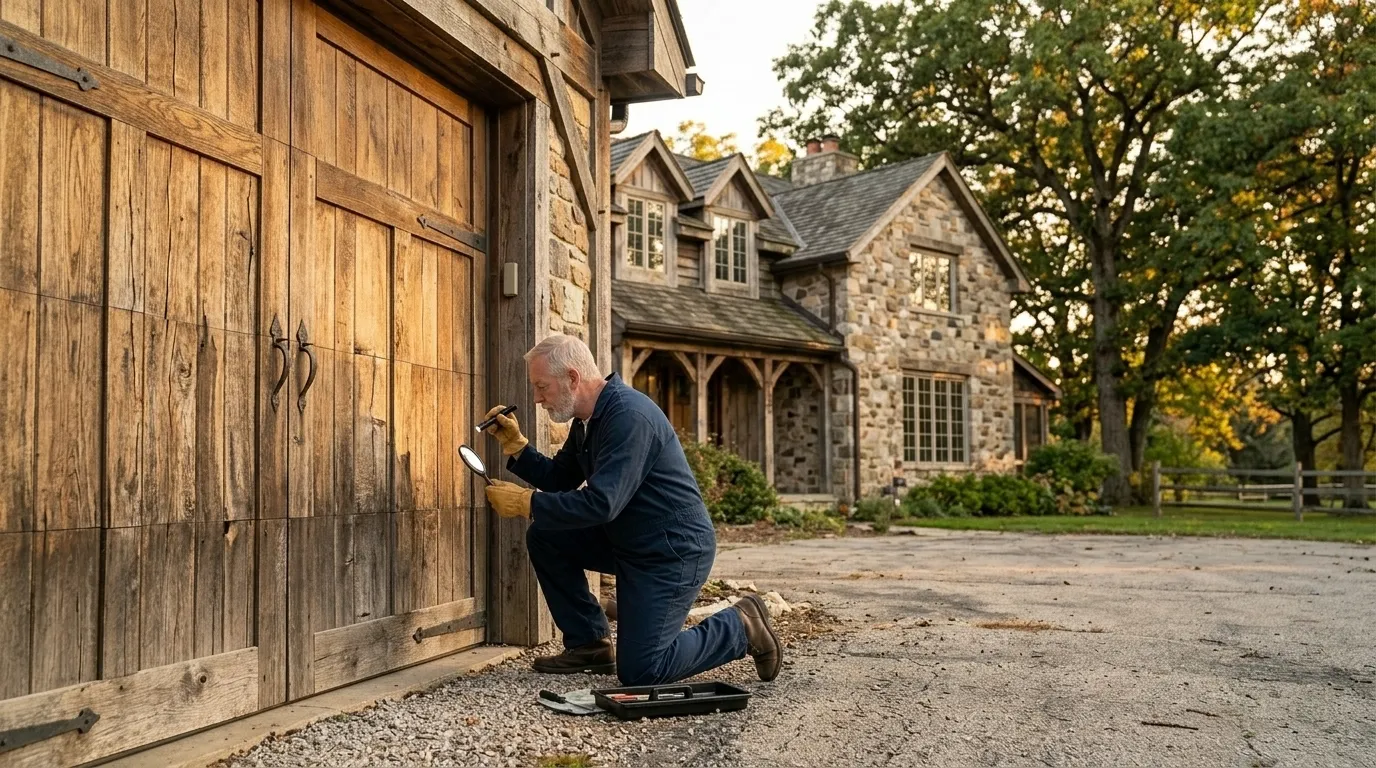
Here's the honest part: not every spring needs to be replaced the moment it shows wear, and we won't tell you otherwise just to get a job on the books. If a spring is a few years old, still has visible gaps between coils under load, and the door opens without straining, it can often wait until it actually fails or until a routine check flags it.
What we won't do is recommend patching or re-tensioning an old spring instead of replacing it. Springs aren't designed to be repaired - they're designed to be replaced as a pair when one goes, and once one has snapped from age and cold, the other one on the same door is almost always close behind. If your door is still original to a house built decades ago, don't wait for the second bang.
How We Can Help
Garage Door Repair
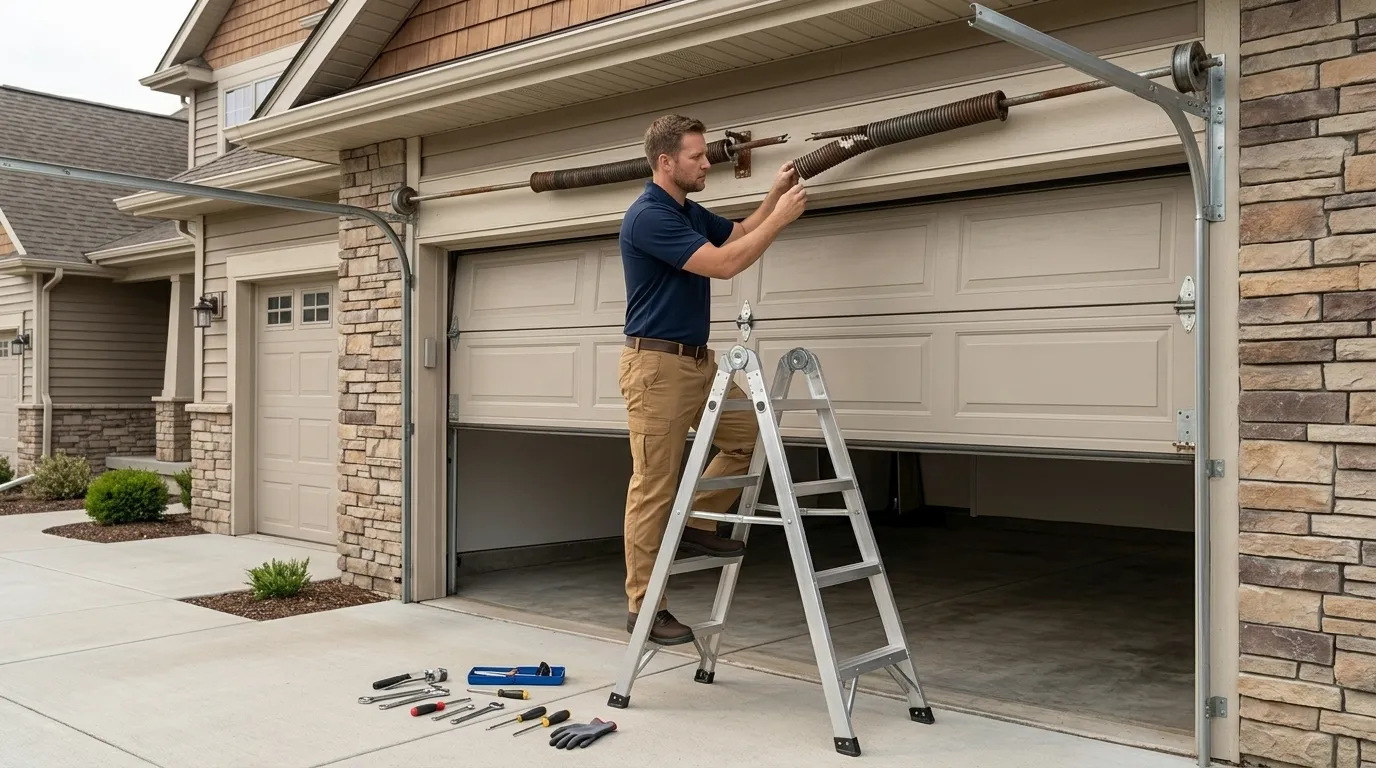
Springs, cables, tracks, rollers, and openers fixed by a tech who explains the problem before touching anything.
Learn more →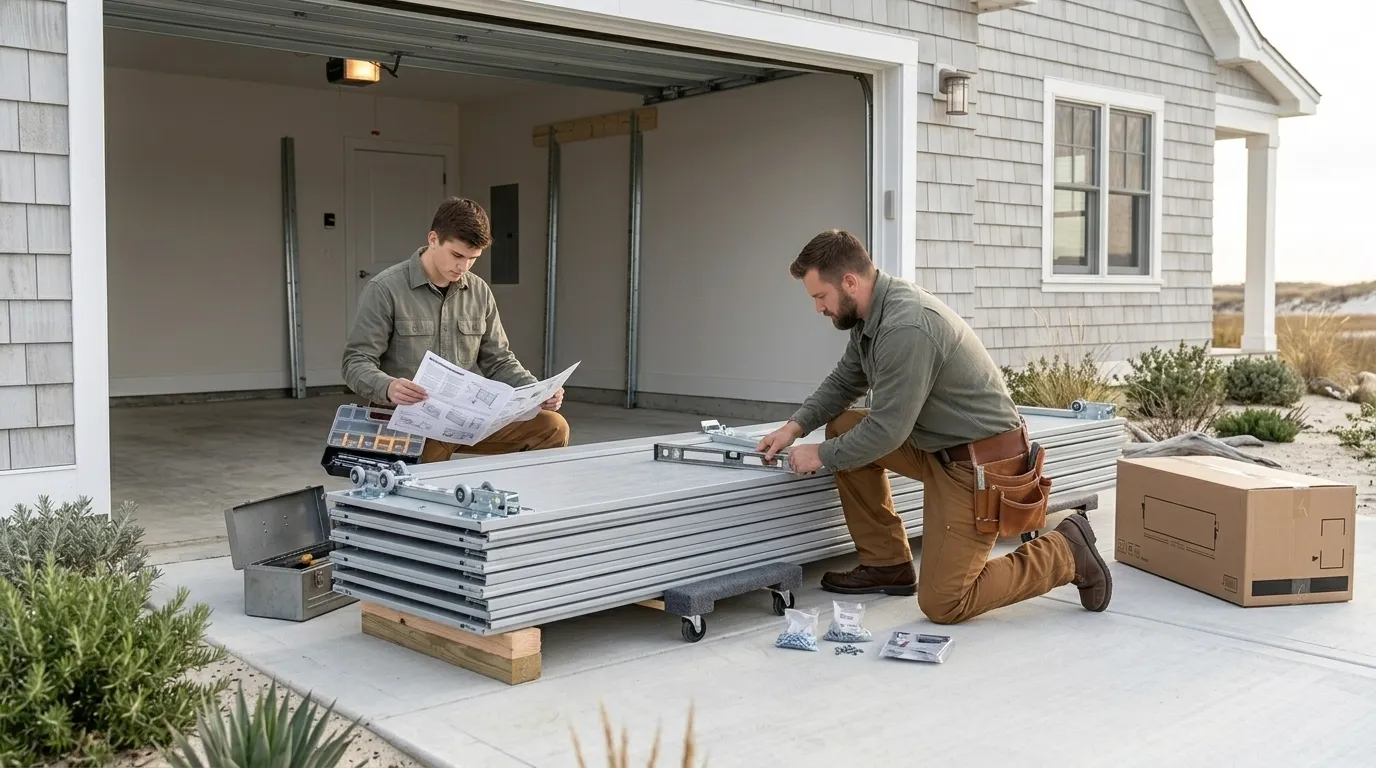
Garage Door Installation
New sectional doors sized and installed for the housing stock actually built in this area.
Learn more →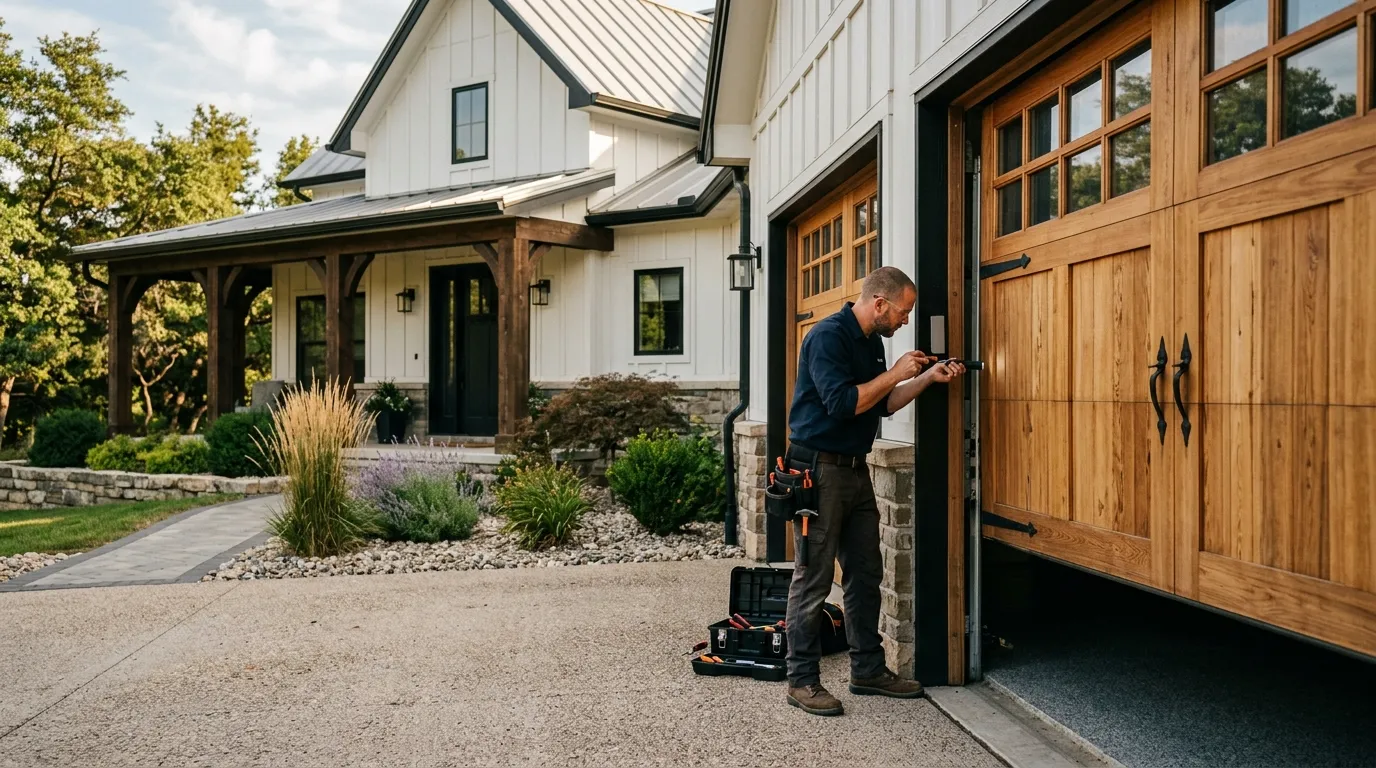
Garage Door Service
Tune-ups, lubrication, and safety checks that catch a small problem before it becomes a service call.
Learn more →Frequently Asked Questions
Why did my spring break on such a cold morning?
Cold makes steel more brittle, and a spring that's already near the end of its cycle life loses flexibility fast when temperatures drop. It's usually not the cold alone - it's decades of use catching up with the spring right as a freeze pushes it past its limit.
Do I need to replace both springs if only one broke?
On a double-door setup, most homeowners here replace both at once. If one spring failed from age, the matching spring installed the same year is usually close behind, and it's cheaper to do both in one visit than to call again in a few months.
Can I just tighten or repair the broken spring myself?
No. Torsion springs are under heavy tension and aren't built to be patched - they're replaced, not repaired. Beyond the safety risk of working on a wound spring, a re-tensioned old spring will just fail again, often sooner than expected.
Have a Door That Needs a Second Opinion?
Call and describe what it is doing - we will tell you what it likely is.