
Buffalo Grove Garage Door Guide
What That Sound In Your Garage Actually Means
Buffalo Grove's housing runs 1938 to 2009, mostly 1980s-90s builds. Here's which garage door noises mean real trouble, and which are just cold weather.
- Licensed & Insured
- Same-Area Service Calls
- Upfront Pricing
How Local Conditions Play In
Buffalo Grove sits in a cold, moderate climate zone, which means the metal in your spring and track sees real temperature swings every year - not the deep-freeze extremes of the far north, but enough cold to stiffen steel and thicken lubricant every winter. A door that ran quiet in August can start groaning in January for no other reason than the cold tightening tolerances on rollers and hinges.
Housing stock here runs from 1938 through 2009, with most of it landing in the 1980s and 90s wave that built out much of Buffalo Grove. That matters for noise because a door installed in that era is likely on its second or third opener by now, but the track and spring anchor points are often original to the house. A squeal that shows up on a house from that build window is frequently a mismatch - a newer opener bolted to decades-old header hardware that was never sized for it.
What Most People Get Wrong
The most common mistake we hear is "the opener is dying" when the opener has nothing to do with the sound. Most people who own a house that went up during Buffalo Grove's 1980s-90s building boom hear a metallic bang and assume the motor, because that's the part they can see and hear from the garage. But a loud bang on lift is almost always a spring, not a motor - either a torsion spring that's fatigued after years of cold-weather cycling, or a cable that's started to fray on the drum.
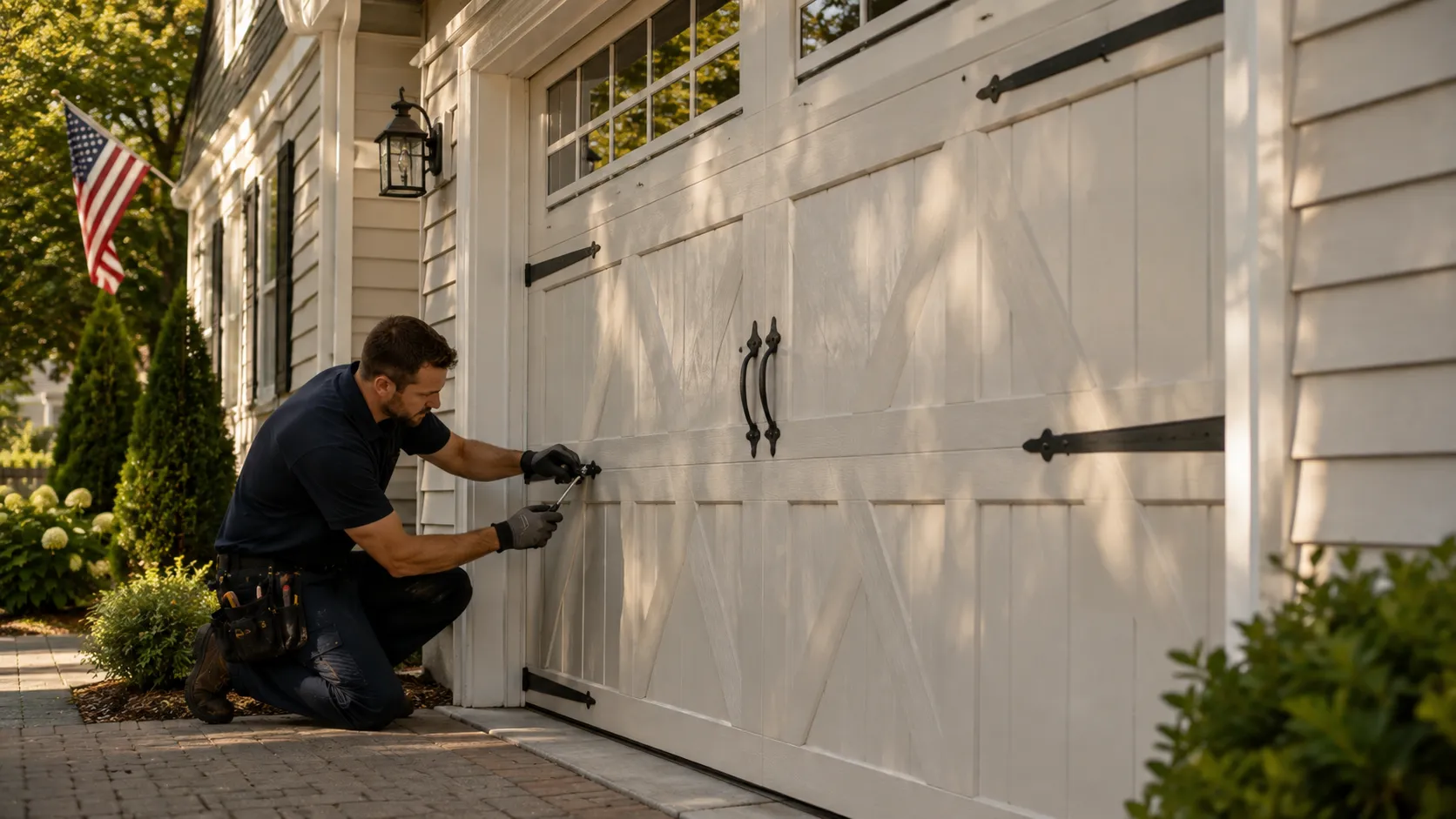
The other misread is grinding rollers getting mistaken for a track problem. Old steel rollers on hardware from the earlier end of that 1938-2009 build range wear a flat spot over time, and that flat spot slaps the track on every rotation. Swapping the track fixes nothing - the roller is the part that's worn.
It sounds like a track fix. It's a five-minute roller swap, but only once you've correctly identified what's making the noise.
What Is Going On
Here's the pattern we actually see on service calls in this area. A rhythmic thump once per rotation of the door usually means a bent track section or a roller with a flat spot - common on doors that have logged fifteen-plus winters of the temperature swings this cold-moderate zone puts them through. A sharp bang, once, not repeating, almost always means a spring has let go or a cable has slipped off a drum.
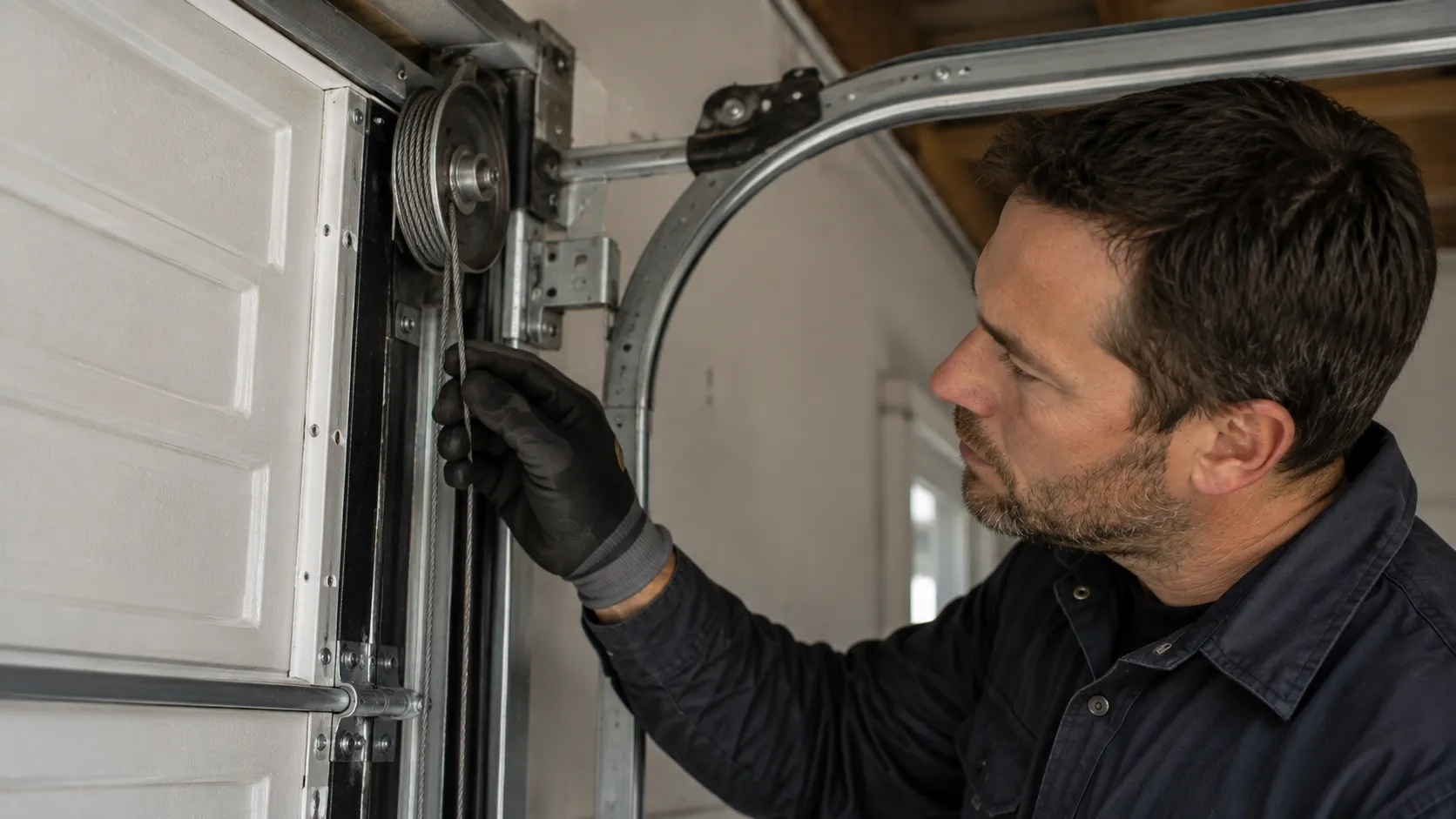
A slow grind that gets worse as the door opens usually points to a worn bearing plate at the end of the torsion shaft, more common on the older end of the 1938-2009 stock where original bearing hardware has outlived a couple of openers. A squeal that only shows up on cold mornings and quiets down by afternoon is almost never a part failure - it's just stiff grease in the hinges reacting to the season, and it usually needs nothing more than the right lubricant, not a replacement part.
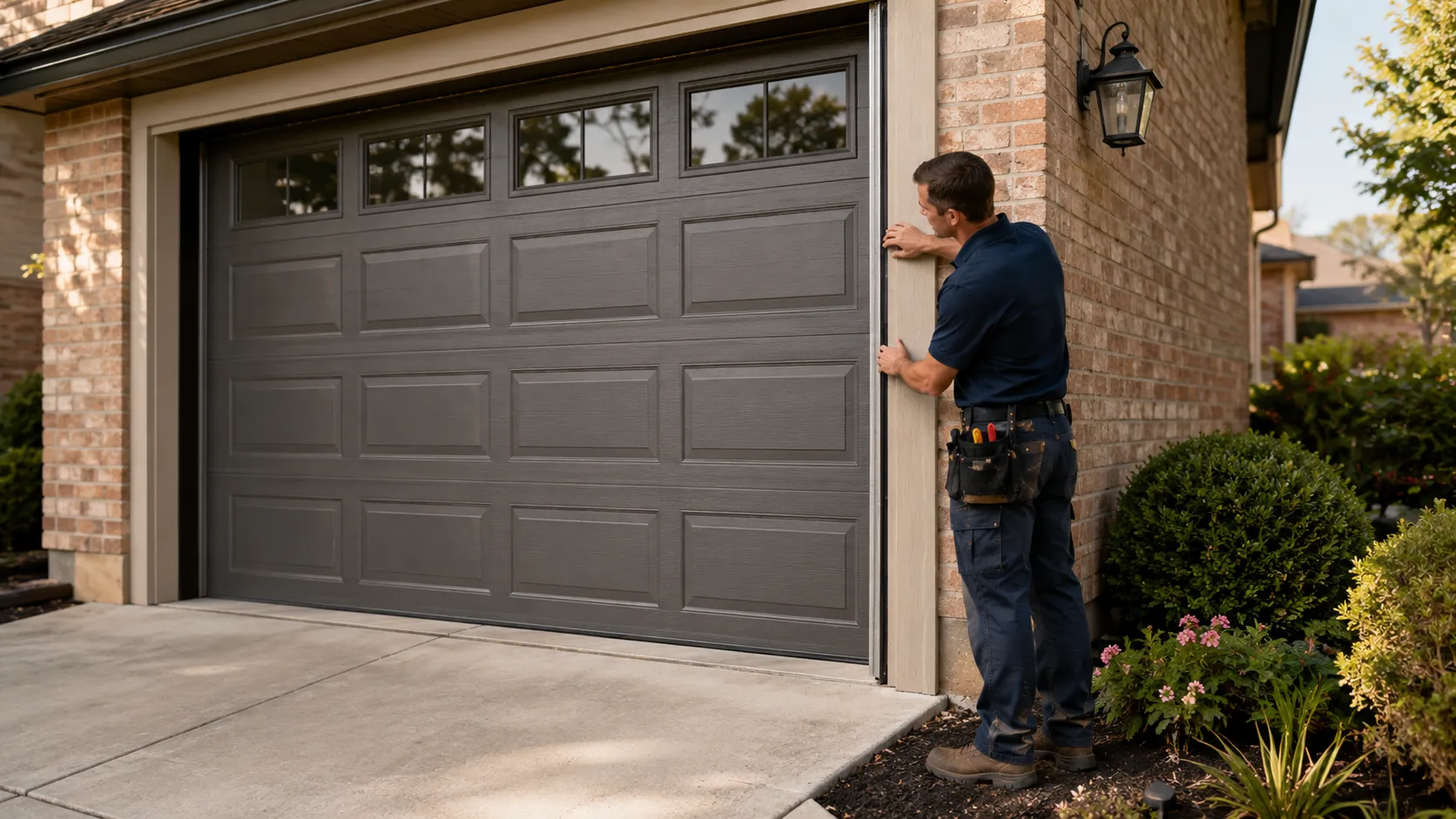
Leaving It Alone
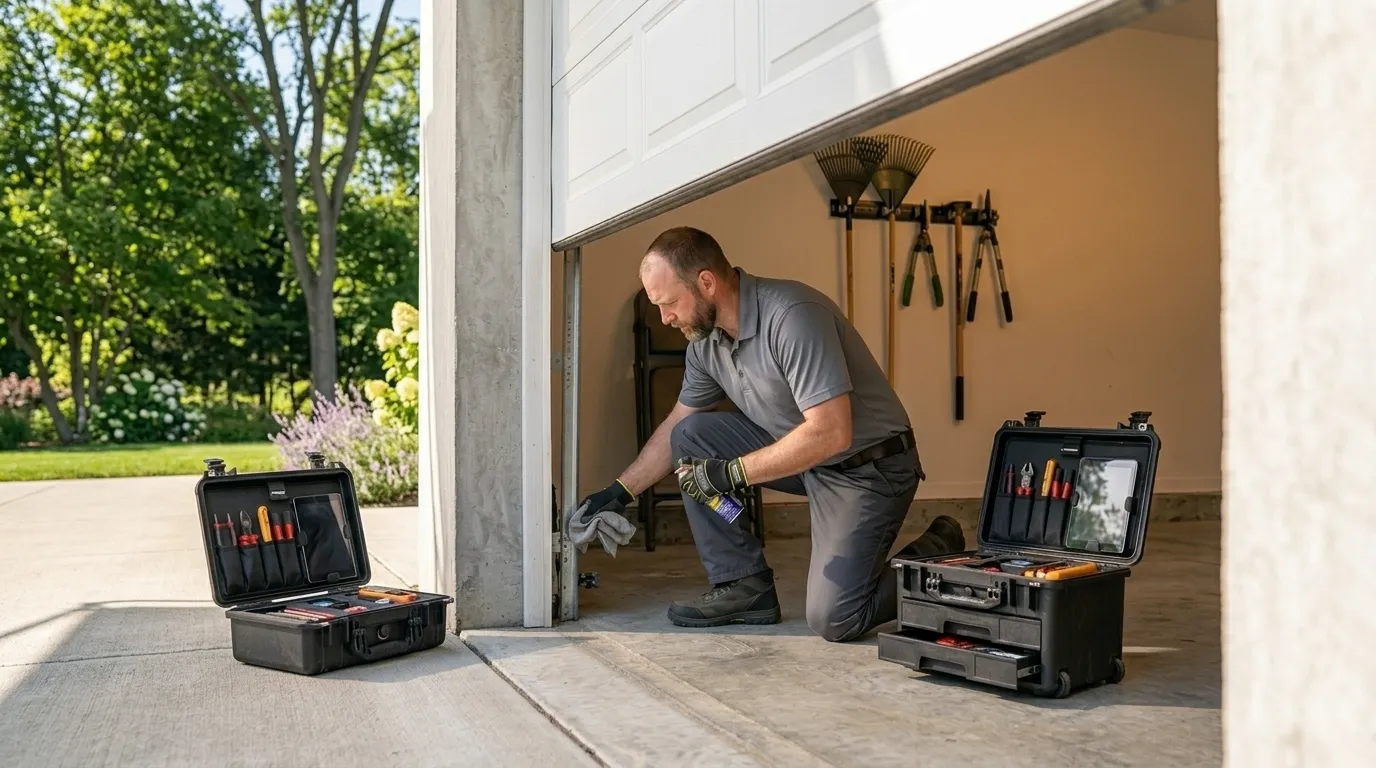
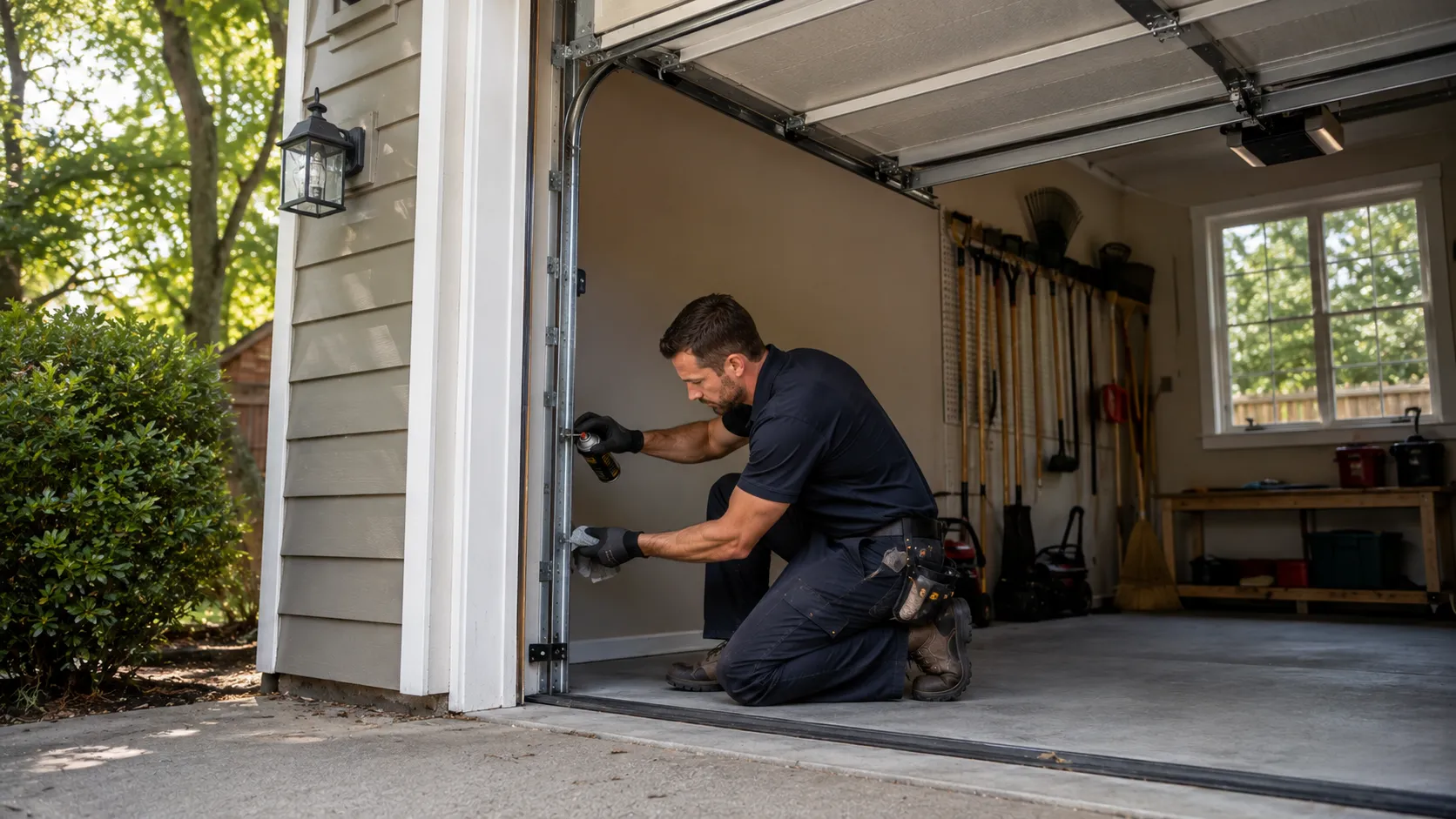
Not every noise needs a service call. If it's a seasonal squeal that shows up only on the coldest mornings and fades by afternoon, that's the cold-moderate climate doing what it does to metal and grease - a homeowner can usually quiet it with the right lubricant on the hinges and rollers.
What we won't do is talk you into replacing a track or opener when the fix is a two-dollar roller. And we won't tell you a spring job is a DIY project - torsion springs are under enough tension to cause real injury, and that's not a corner worth cutting to save a service call.
Here's the honest limit: if your door is on the older end of the 1938-2009 range and the opener, track, and spring are all original, sometimes the repair costs get close to what a new setup would run, and at that point patching the noise isn't the better deal. We'll tell you when that math doesn't work in your favor, even if it means a smaller job for us.
How We Can Help
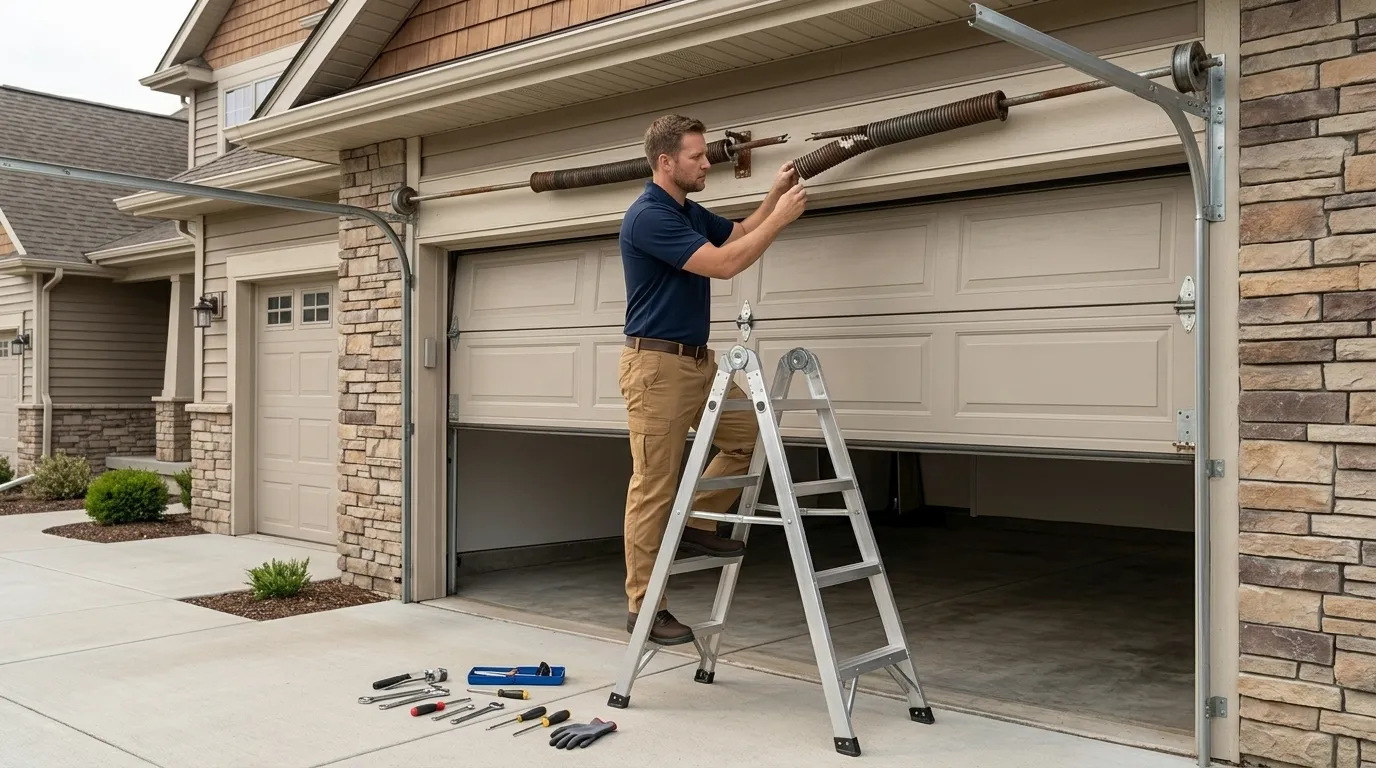
Garage Door Repair
Springs, cables, tracks, rollers, and openers fixed by a tech who explains the problem before touching anything.
Learn more →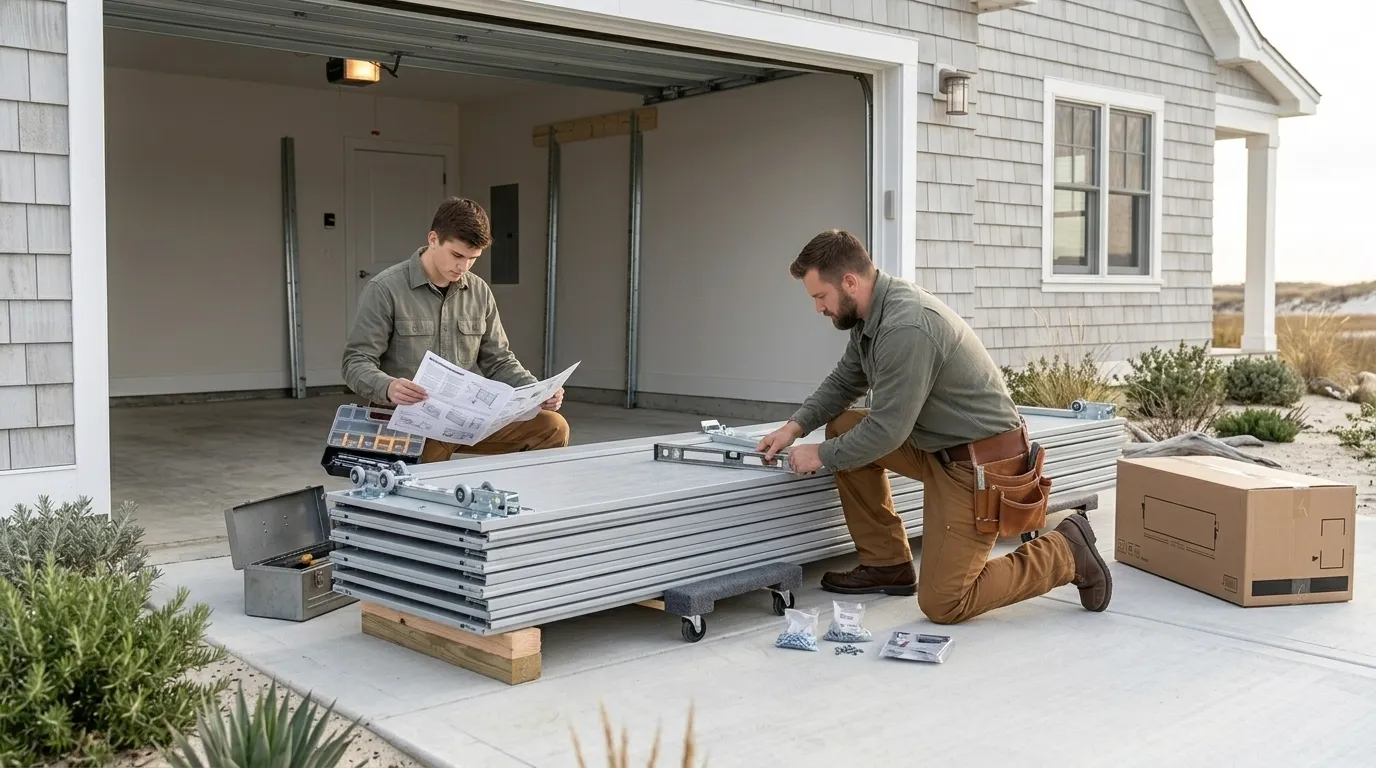
Garage Door Installation
New sectional doors sized and installed for the housing stock actually built in this area.
Learn more →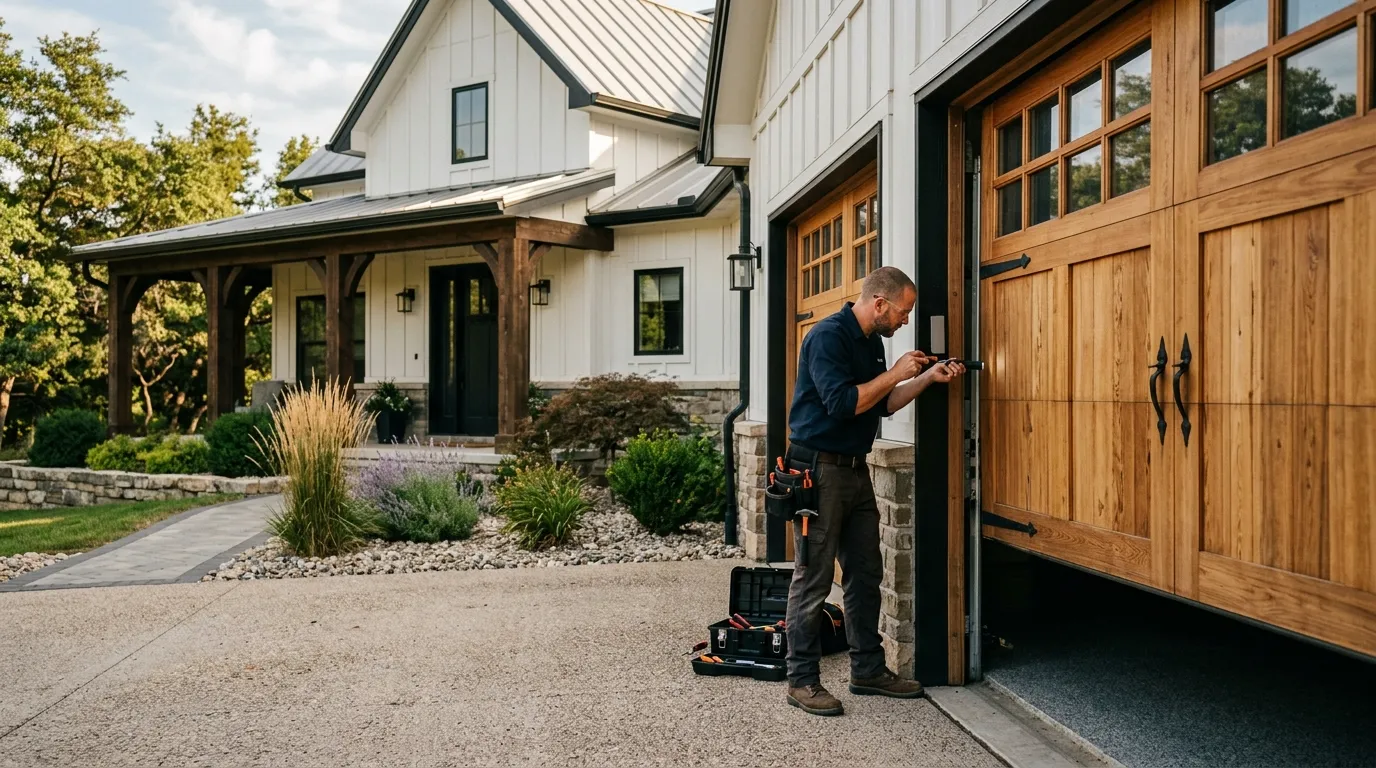
Garage Door Service
Tune-ups, lubrication, and safety checks that catch a small problem before it becomes a service call.
Learn more →Frequently Asked Questions
Why does my garage door only squeal in the morning?
That's the cold acting on stiff grease in the hinges and rollers, not a failing part. Buffalo Grove sits in a cold-moderate climate zone, so metal contracts and lubricant thickens overnight. Once the garage warms up a few degrees, the squeal usually fades. A fresh application of the right lubricant on hinges and rollers usually clears it.
Is a loud bang always the spring?
Almost always, yes. A single sharp bang during lift or close is typically a torsion spring letting go or a cable slipping off its drum, not the opener. Springs on older Buffalo Grove houses have often been cycling through cold winters for decades, which shortens their working life. Don't run the door again until it's inspected.
My house was built in the 1980s - does that explain the noise?
It can. A lot of Buffalo Grove's housing landed in the 1980s-90s building wave, and many of those garages still have original track hardware even after one or two opener replacements. A newer, stronger opener paired with 40-year-old header brackets often produces a rattle or squeal that a same-era setup wouldn't have.
Should I replace the whole track if it's grinding?
Not usually. Grinding is more often a worn roller with a flat spot slapping against a perfectly good track, especially on the older end of the 1938-2009 housing stock here. Replacing the track when the roller is the actual problem wastes money. Have the roller checked first.
Have a Door That Needs a Second Opinion?
Call and describe what it is doing - we will tell you what it likely is.