Buffalo Grove Garage Door Guide
What Happens to Your Opener When the Power Drops
How Buffalo Grove's 1980s-era openers handle winter power outages, what battery backup actually does, and when the motor itself is the real problem.
- Licensed & Insured
- Same-Area Service Calls
- Upfront Pricing
How Local Conditions Play In
A lot of the openers we get called on in this area went in during the 1980s and 90s, matching the housing stock across the 79 named areas we work in - most of it built between 1938 and 2009 with a median around 1980. That means a big share of units out there are chain-drive motors from before battery backup was standard equipment, paired with circuit boards that were never rated for the swings a Chicago-area winter throws at an attached garage. Cold, moderate climate here means the garage itself often sits in the 30s and 40s for weeks at a stretch, and that affects the opener before it affects the door.
Circuit boards and capacitors age faster with repeated cold-to-warm cycling than they do in a heated space. If your opener is original to a house built in that median-1980s window, it's already past the point where a power blip is just an inconvenience - it's often the thing that finally finishes off a board that was already marginal. We see this pattern often enough in the housing stock here that it's worth checking your opener's age before winter, not after the power goes out.
What Most People Get Wrong
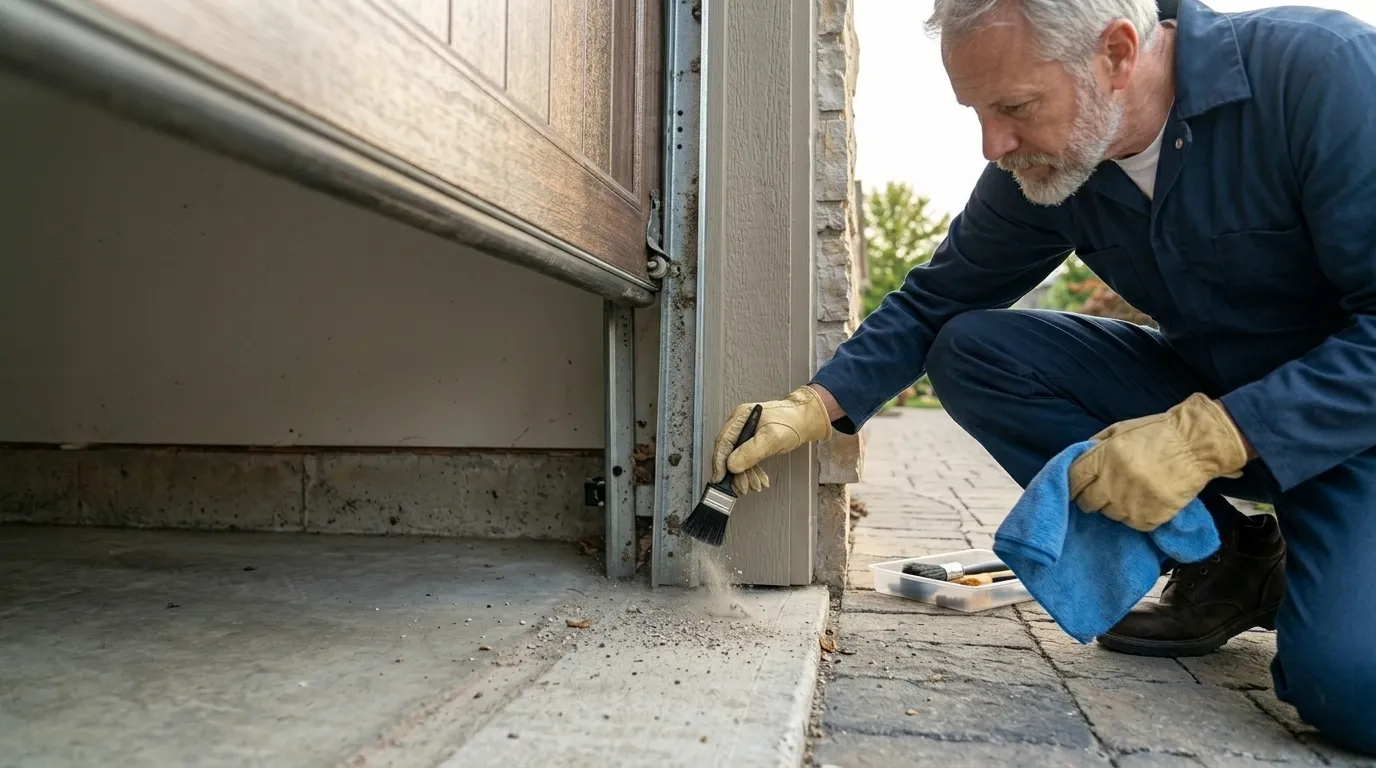
The most common mistake: assuming the opener without battery backup will just "come back on" once power returns, the same way a light switch does. Older chain-drive units built for the 80s and 90s housing stock in this area often need the logic board to relearn the travel limits after a hard power interruption, and some won't cycle at all until you pull the manual release and reset the carriage by hand. People also assume the manual release cord is optional in a pinch - it is not optional, it is the only way to move the door at all once power is out and there's no backup battery, and on a heavy insulated door that's more effort than most people expect.
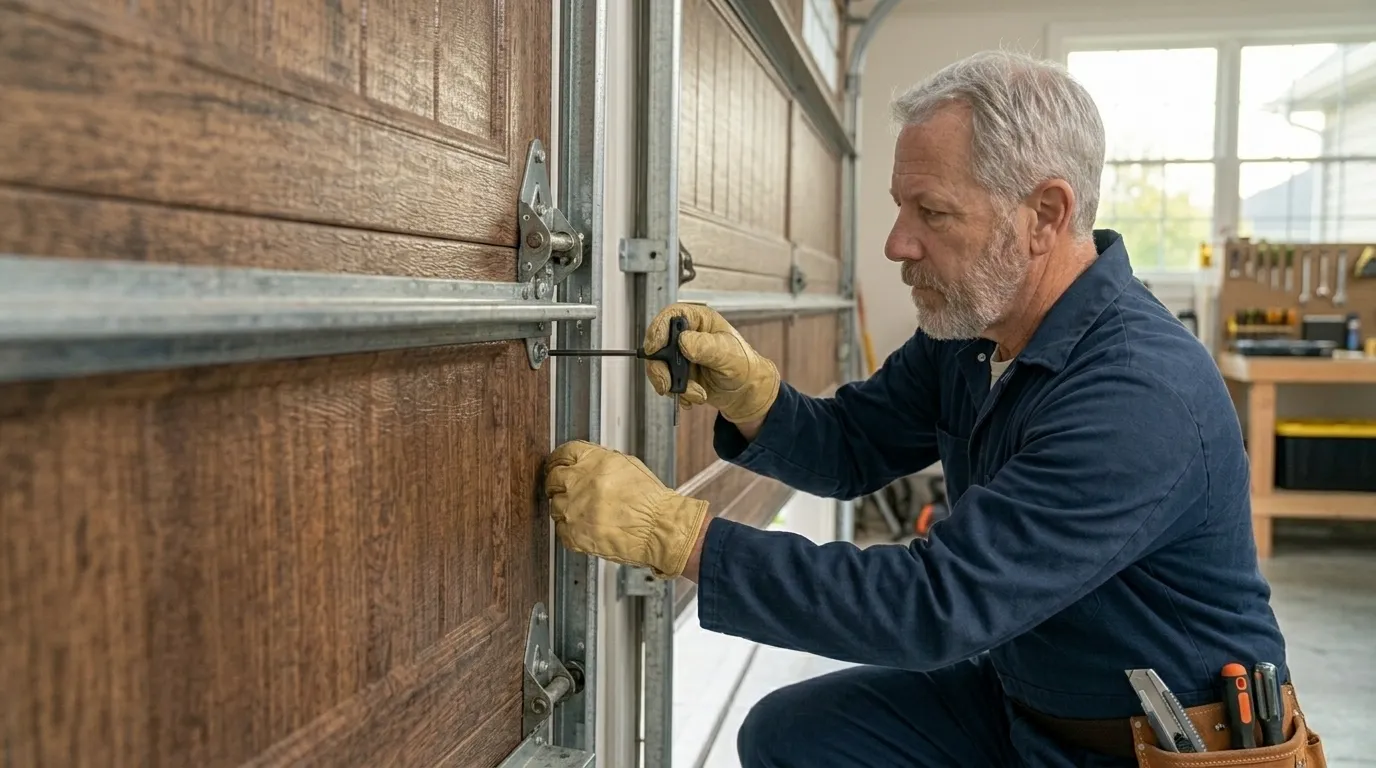
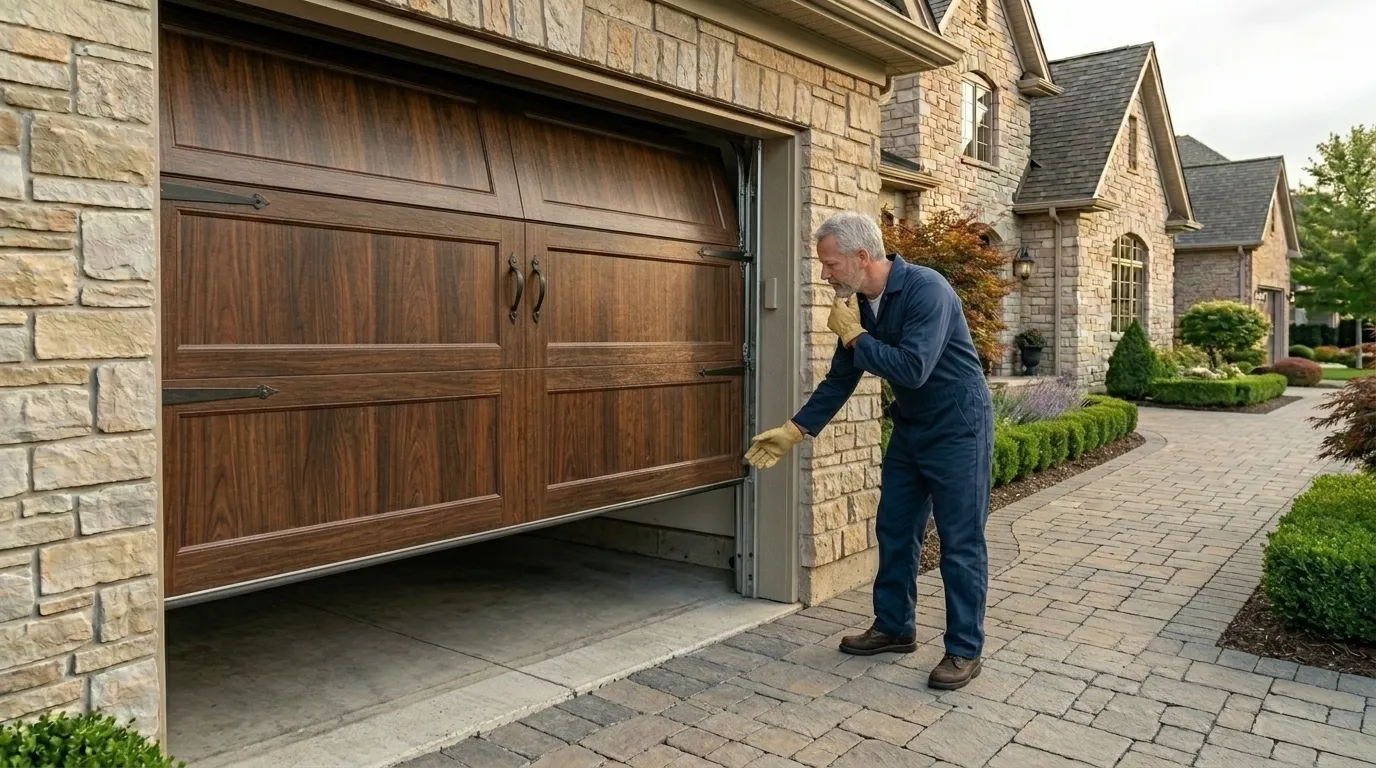
The other error is confusing an opener problem with a door problem. If the door won't move when you pull the cord and try to lift it by hand, that's springs, not the opener - and pushing hard on it anyway is how people get hurt or bend a track.
What Is Going On
When the power actually cuts, three things determine whether you're stuck: whether the opener has a battery backup unit, whether the manual release still works cleanly, and whether the door balances properly with the springs it has. In the older stock common in this area - built in that 1938 to 2009 range with most of it clustered in the 80s and 90s - the third piece is where we find the surprises. A door that's been fighting worn springs for years can feel impossible to lift by hand in a power outage, even though it moved fine under motor power.
The motor was doing more of the work than anyone realized. Cold makes this worse: metal springs lose a little tension efficiency in low temperatures, and a marginal spring set that limped through summer can feel dead in January. None of that is an opener defect.
It's the mechanical side masking itself until the electrical side goes quiet.
Leaving It Alone
Not every opener issue after a power cut needs a same-day call. If the door moves freely by hand, cycles once through a manual reset, and the remotes reprogram without a fight, you likely don't need a truck out - that's a five-minute job you can do yourself with the manual in the drawer or the model number off the motor housing. Where we'd tell you to stop and call: if the door won't lift by hand at all, if it drops instead of holding position when you release it partway, or if the opener runs but the door doesn't move.
Those point to spring or cable trouble, not the opener, and a battery backup unit won't fix a mechanical binding problem. One honest limit on our end - we don't stock every logic board for every opener brand made in the 80s and 90s, so a board-level repair on an older unit sometimes means a short parts wait rather than a same-visit fix.
How We Can Help
Garage Door Repair
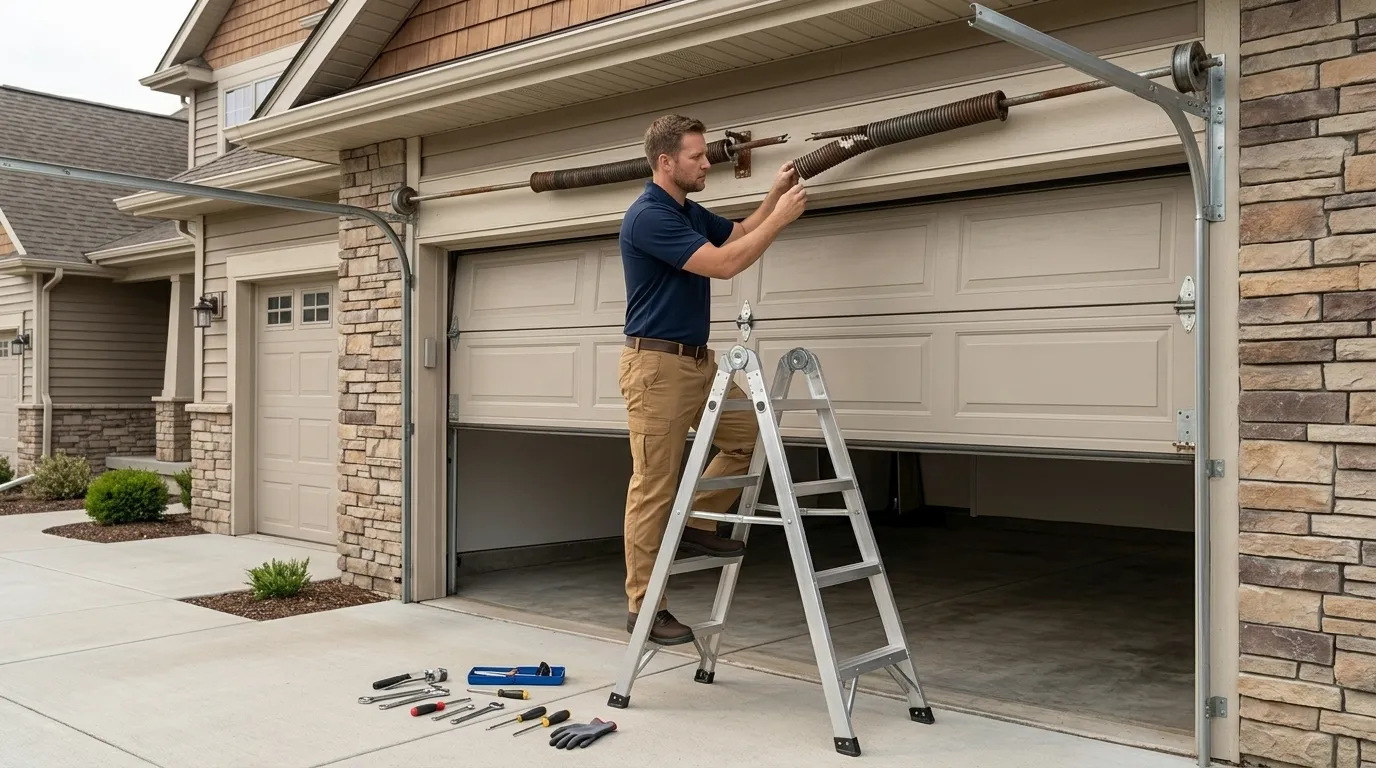
Springs, cables, tracks, rollers, and openers fixed by a tech who explains the problem before touching anything.
Learn more →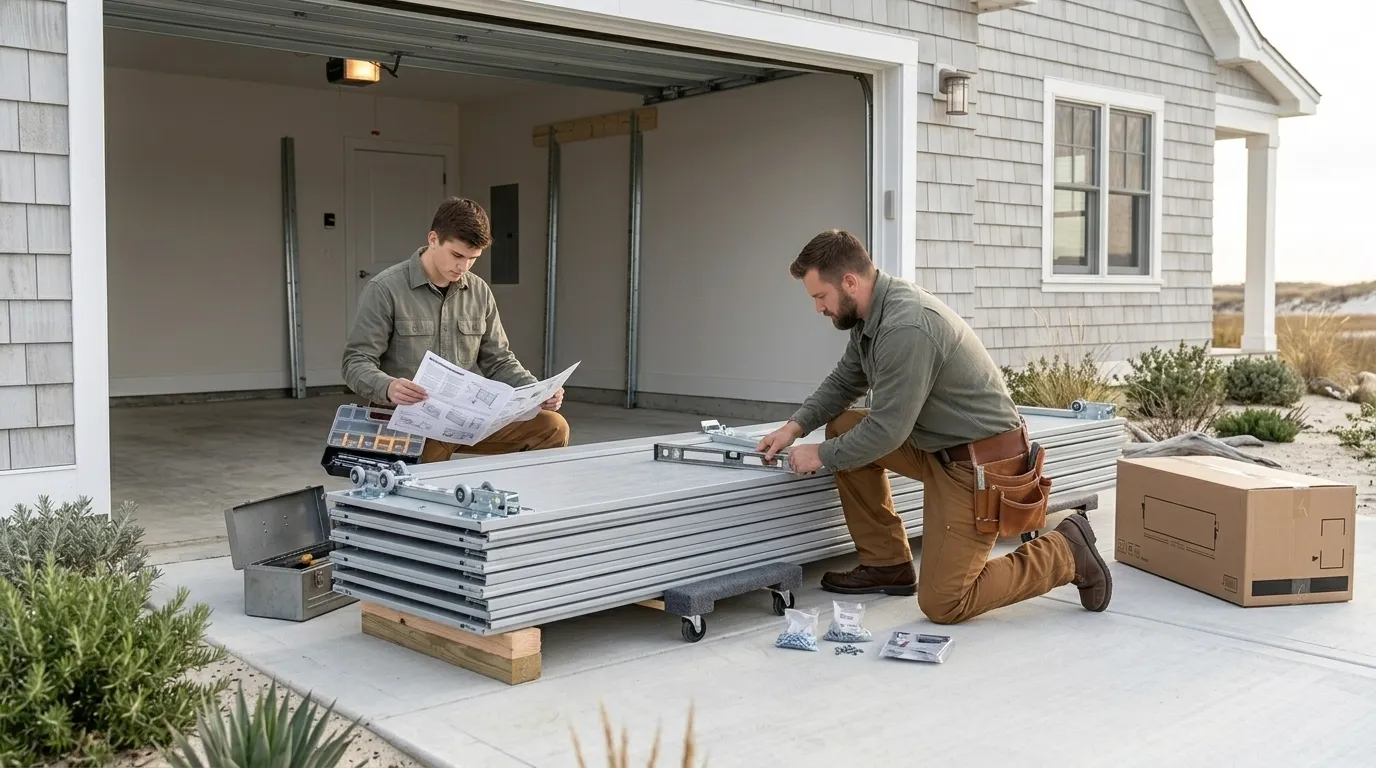
Garage Door Installation
New sectional doors sized and installed for the housing stock actually built in this area.
Learn more →
Garage Door Service
Tune-ups, lubrication, and safety checks that catch a small problem before it becomes a service call.
Learn more →Frequently Asked Questions
Does my opener need a battery backup if I already have a generator?
Not necessarily, but a generator that isn't wired to kick in automatically leaves you with the same manual-release situation for however long the gap is. Battery backup units are cheaper than most generators and act instantly, which matters more for an opener on an older board that resets slowly after a hard power loss.
Why won't my door move at all after the power came back on?
Usually the logic board lost its travel limits and needs a manual reset - unplug it, pull the release, run the door by hand to confirm it moves freely, then replug and let it relearn open and closed positions. If it still won't run the motor, the board itself may be the failure, more common on units original to older houses in this area.
Is it normal for the door to feel heavier in winter when I lift it by hand?
Some increase is normal - springs lose a bit of tension efficiency in cold, moderate winters like this area gets. If it feels significantly heavier than it did a month ago, that's worn springs showing themselves now that the motor isn't compensating, not a seasonal quirk to ignore.
Have a Door That Needs a Second Opinion?
Call and describe what it is doing - we will tell you what it likely is.