
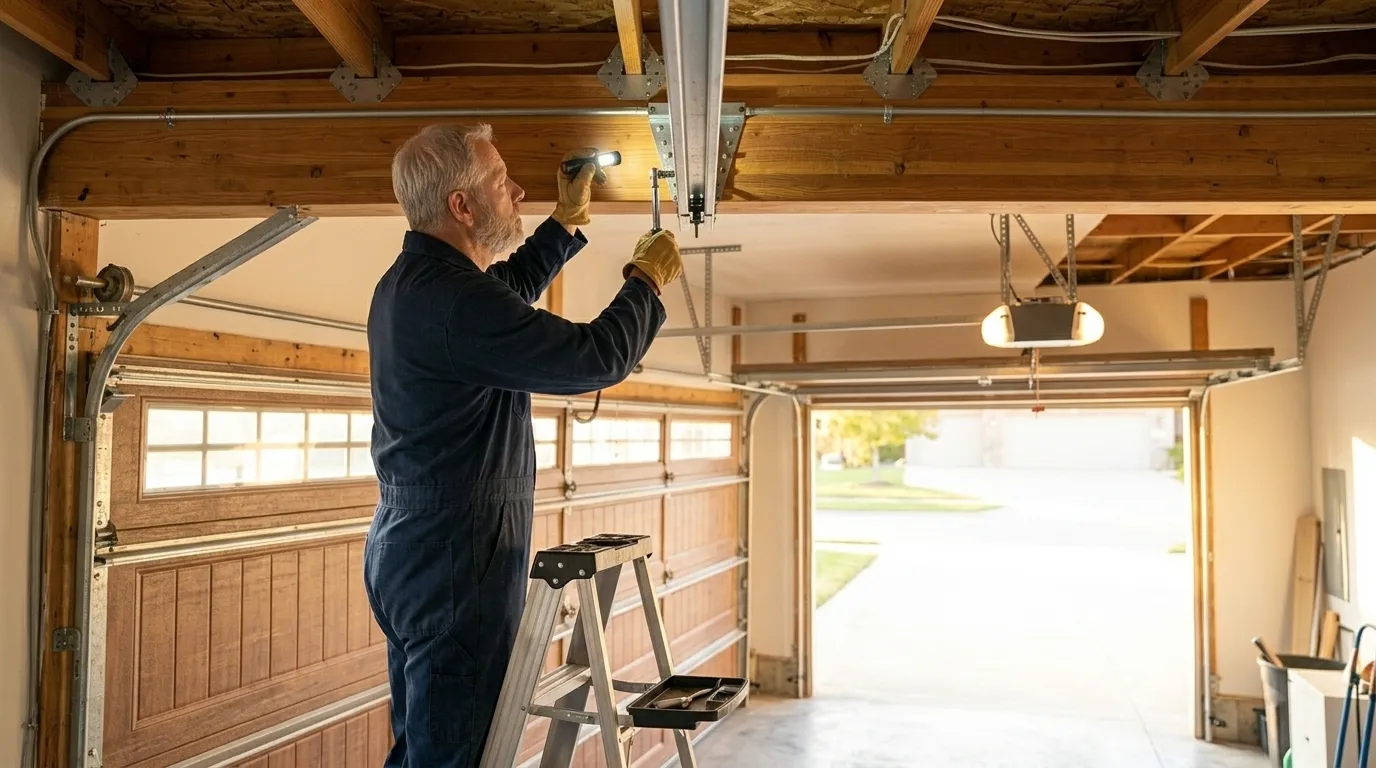
Garage Door Repair in Algonquin
Garage Door Repair for Algonquin, IL Homes
Garage door repair for Algonquin homes built mostly in the 1990s. We travel 18 miles from Buffalo Grove for spring, opener, and track jobs on this era's hardware.
- Licensed & Insured
- Same-Area Service Calls
- Upfront Pricing
What Happens When You Call
-
1
Call or Request a Quote
Tell us what the door is doing and roughly how old the house is - that alone points us toward the likely part before a truck leaves.
-
2
On-Site Diagnosis
A tech checks the spring, cables, tracks, and opener in person and tells you plainly what is actually wrong.
-
3
Straight Price, No Surprises
You get a number before any work starts. It covers parts and labor, nothing added after the fact.
-
4
Fixed the Same Visit
Most repairs are done in one trip. If a part needs sourcing, we tell you that upfront instead of guessing.
The Cost of This Job
We don't quote a number here because a torsion spring swap and a full opener replacement aren't the same job, and we're not going to pretend they are just to fill this paragraph. What we can tell you is what drives the cost on a house in this part of Algonquin: median build year here is 1994, which means most doors are on steel torsion setups rather than the older extension-spring hardware you'd find on something built in the 1960s. That's actually good news for the wallet - torsion parts are still made, still stocked, and don't require the kind of hunting-down that older side-mount hardware sometimes does.
What pushes a job up in price is usually the opener, not the door itself. A house built in '94 is old enough that the original opener, if it's still in service, is likely on borrowed time - and a dead logic board or stripped gear costs more to chase down than to replace outright. We'll tell you straight if that's where you are before we start pulling anything apart.
We travel about 18 miles out from our Buffalo Grove shop to reach Algonquin, and that trip is factored into how we schedule the day, not into a separate charge tacked onto your invoice.
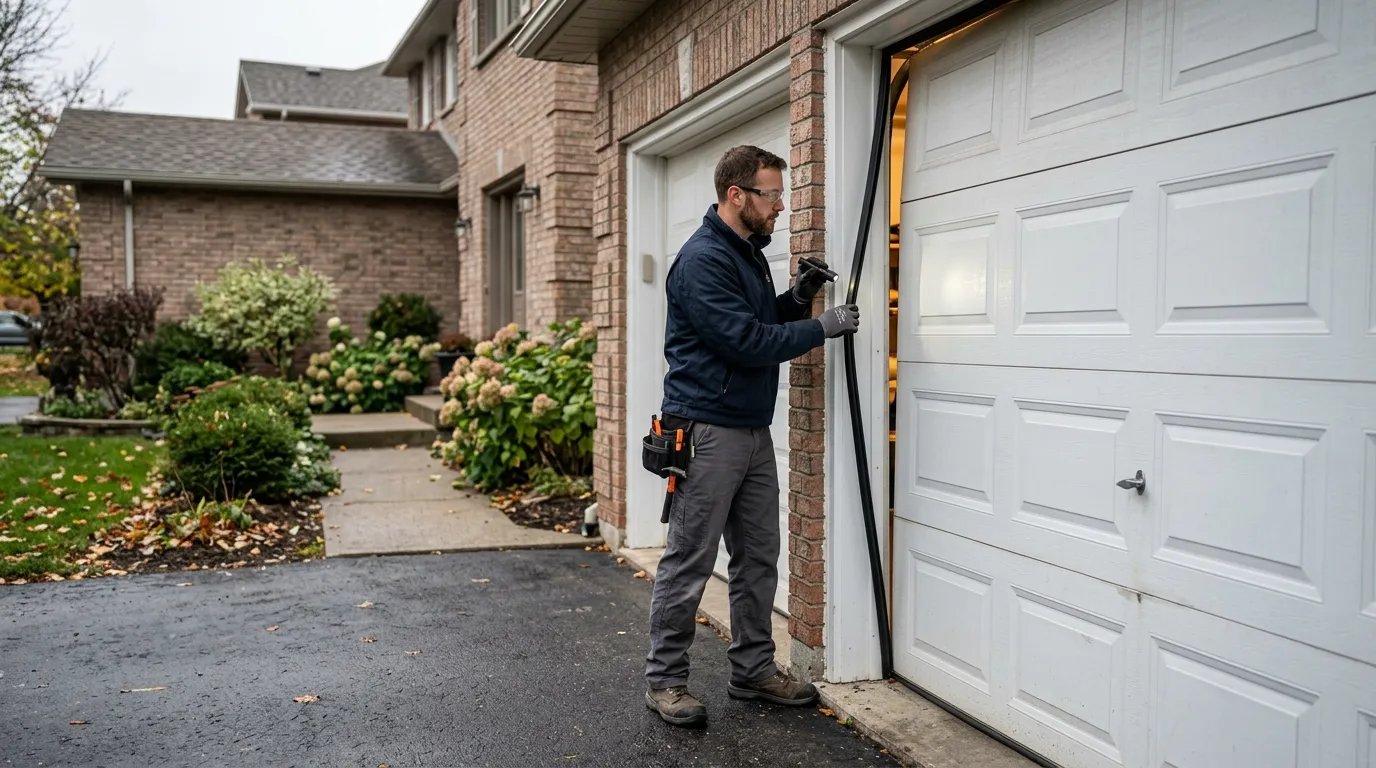
How Long You Are Without the Door
Most single-repair jobs on a torsion setup - one spring, one cable, a bent roller - are a same-visit fix once we're on site. The bigger question for Algonquin is scheduling the drive, since we're coming from Buffalo Grove and not sitting a few blocks away. That means the wait is mostly on the front end, getting a truck out to you, rather than on the work itself once we arrive.
Where it stretches out is opener trouble. If a circuit board or motor needs a part we don't carry on the truck, we're ordering it in, and that can push a job to a second visit. Doors built for this era of house - mid-90s construction - use openers that are common enough that parts aren't usually hard to source, but they're also old enough now that we sometimes need to confirm compatibility before we order, which adds a day.
If the door is stuck shut and the car's trapped inside, tell us that when you call. We prioritize jobs where the door won't move at all over cosmetic issues like a noisy roller, because a house that can't get a car out has a different kind of urgent than a squeak.
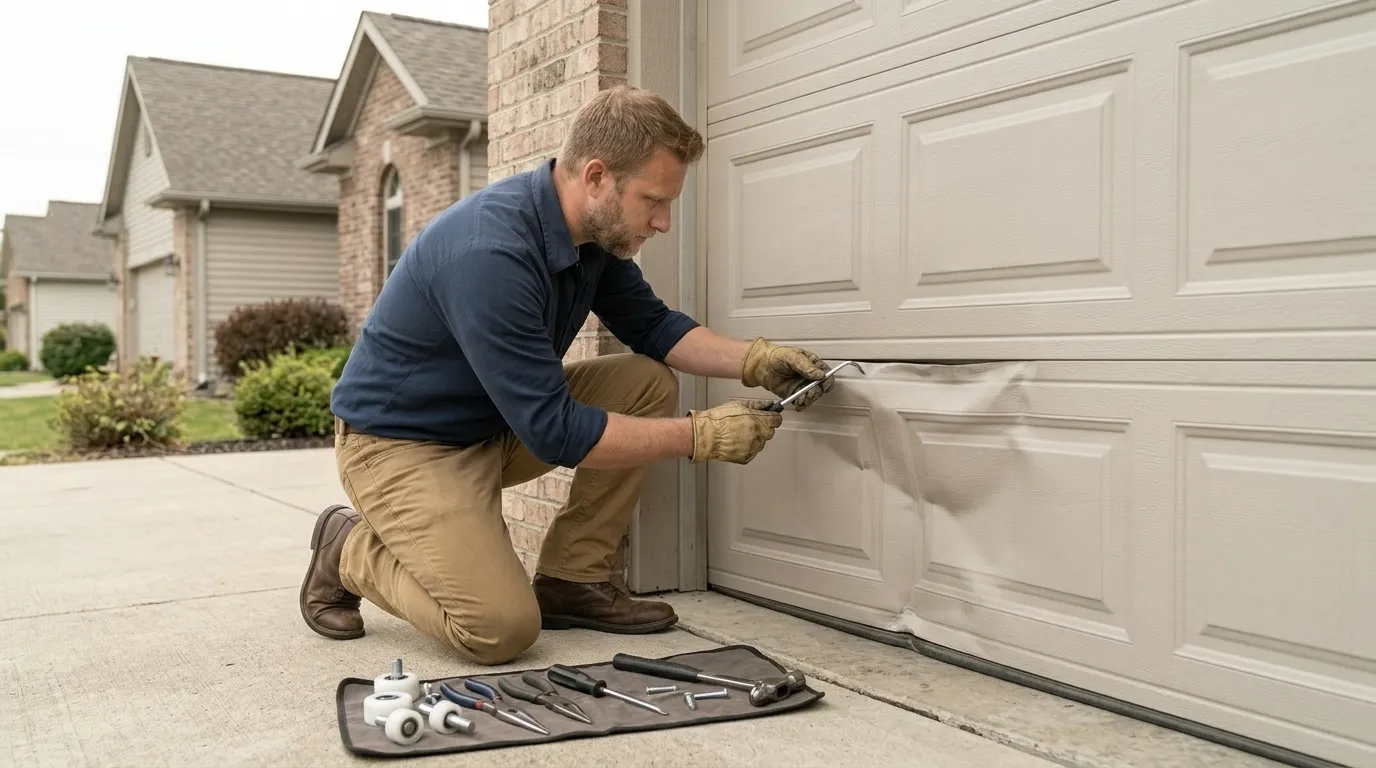
What Causes It Around Here
Algonquin's housing stock centers on 1994, squarely inside the era when torsion springs on steel doors became the standard setup, replacing the older extension-spring designs. That hardware holds up well, but thirty-year-old torsion springs are past the point where most manufacturers rate them for continued cycling, and a lot of the original springs on these houses have never been swapped.
The area sits in a cold-moderate climate band, and that matters for one part specifically: the nylon rollers and the weatherstripping at the bottom of the panel. Repeated freeze-thaw cycling through winter dries out seals and makes plastic rollers brittle, and a roller that's gone brittle is what usually causes the grinding noise homeowners call us about first. It's rarely the spring that announces itself with noise - it's the roller.
We also see openers from this build era failing on the drive gear rather than the motor. That's a wear part, not a defect, and it's the most common reason a door that used to run quiet starts running loud before it eventually quits opening at all.
The DIY Question
A torsion spring is not a DIY repair, on a 1994-era door or any other - the spring is under enough tension to break a bone or worse if the winding bar slips, and we mean that plainly, not as a scare tactic. If your door won't lift and you can see the spring is separated, don't try to force it open with the opener or by hand. Disconnect the opener and leave the door down until someone can look at it.
What you can reasonably check yourself: the sensor eyes near the bottom of the tracks, which get knocked out of alignment more often than people expect and will stop the door from closing at all. A quick look to see if they're facing each other and the light on each is steady, not blinking, takes thirty seconds and saves a service call if that's all it is.
Roller lubrication is also fair game for a homeowner - a shot of the right lubricant on rollers and hinges twice a year keeps the brittle-roller problem we mentioned above from creeping in early. Beyond that - springs, cables, the opener's internal gearing - it's not worth the risk to save a service call.
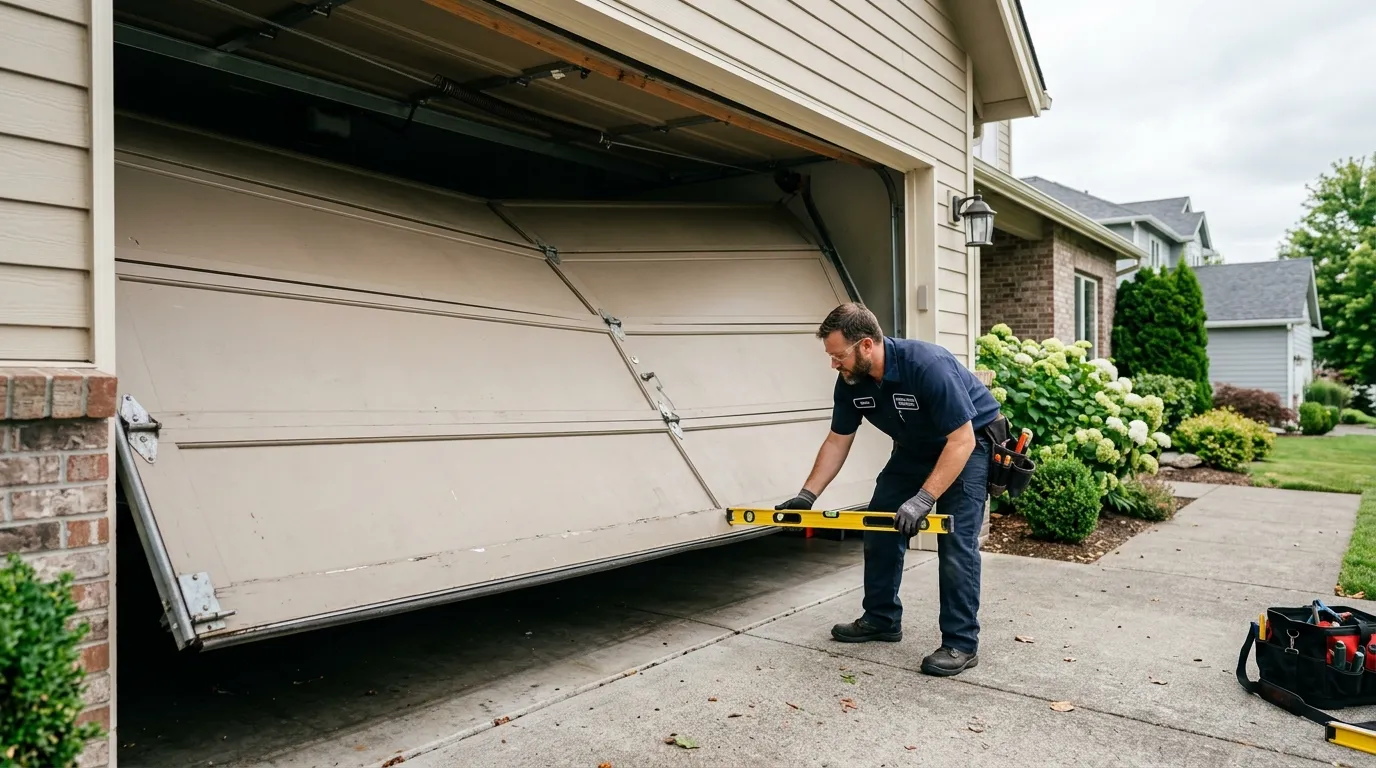
What the Repair Takes
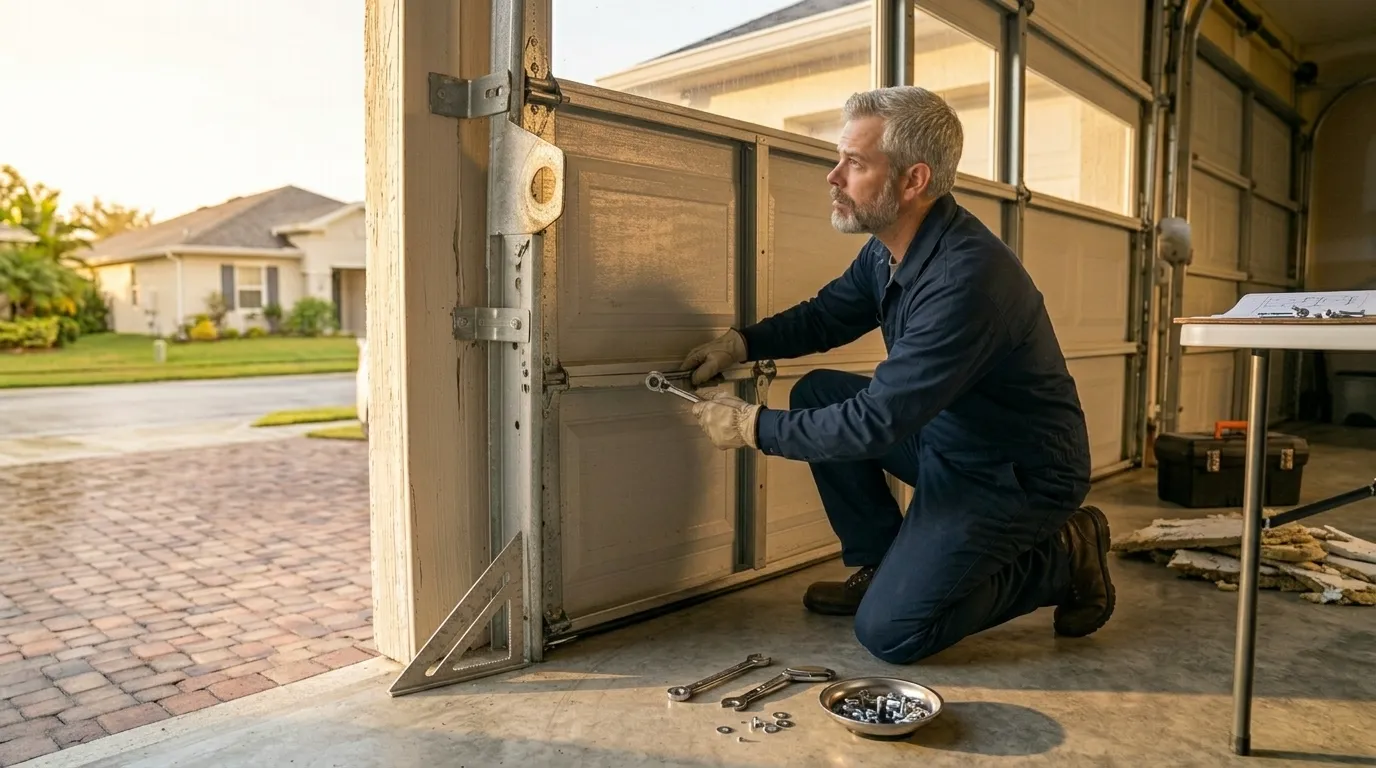
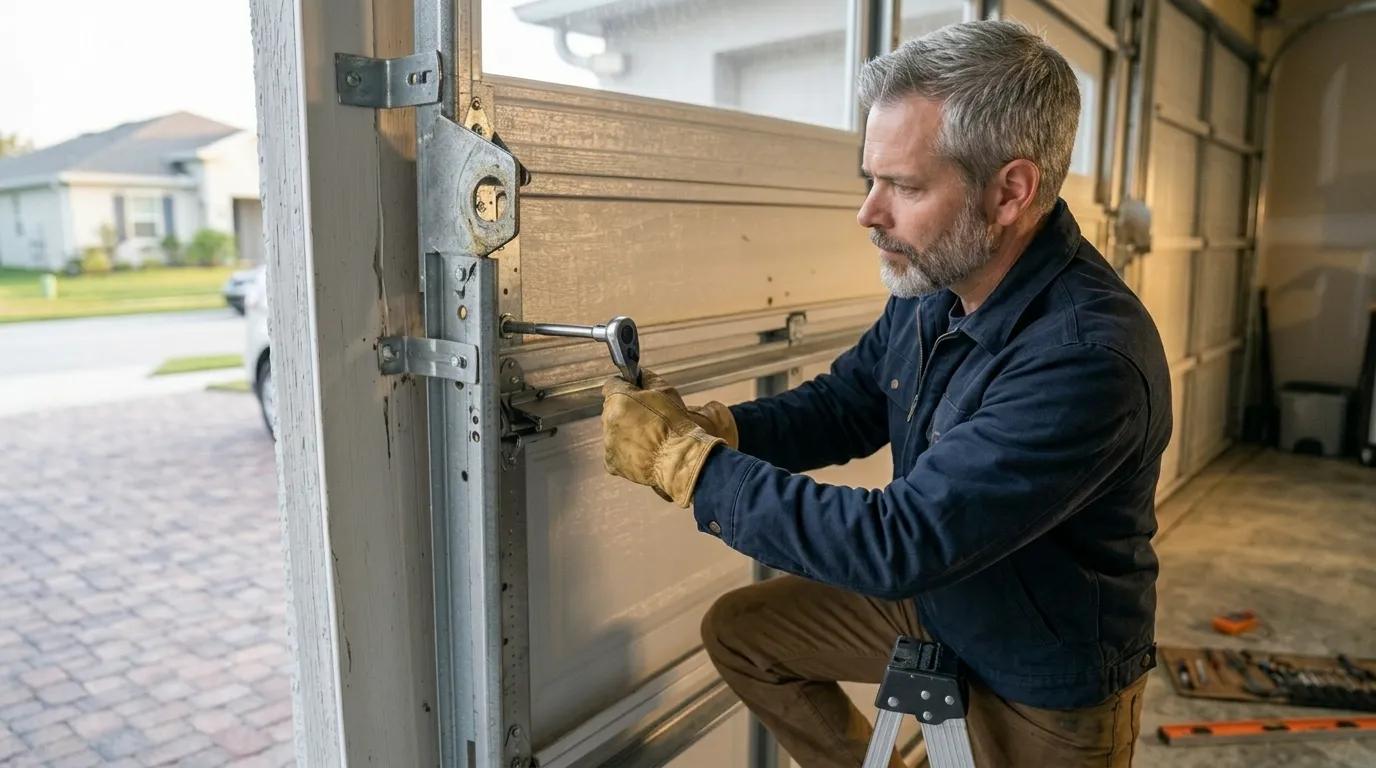
On a standard torsion spring job, we're disconnecting the opener, releasing tension with winding bars, pulling the old spring, and setting a matched replacement - then testing balance by hand before the opener goes back online. On a door built to 1994-era specs, that's usually a predictable job because the hardware is standardized enough that we're not improvising a fix.
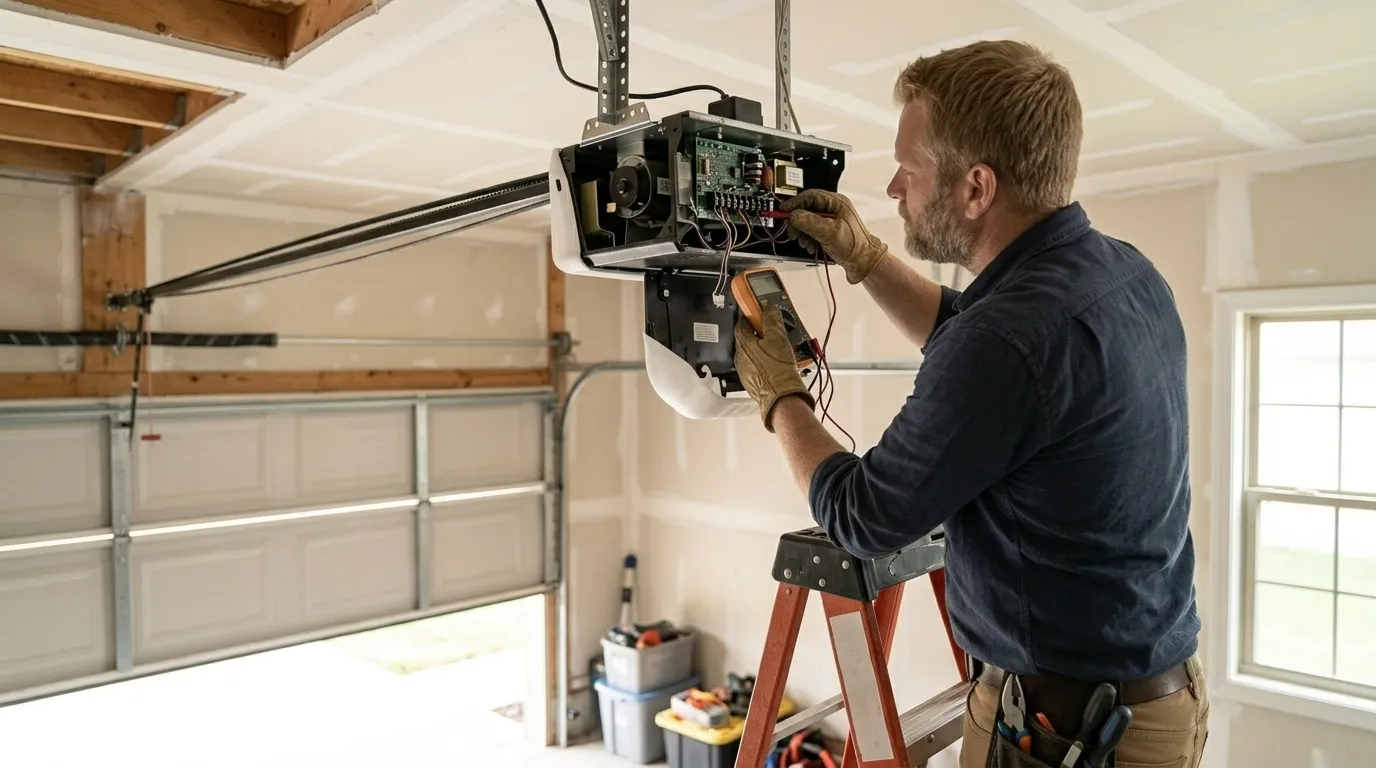
Opener work varies more. If it's a board or logic failure, we're swapping the head unit and reprogramming remotes and any keypad. If it's a gear or motor issue, sometimes replacement makes more sense than repair - once a motor's original to a house this age, sinking money into a rebuild on a unit that's earned its retirement isn't a service we'll push on you.
We test the full cycle before we call a job done: open, close, auto-reverse safety check, and a listen for anything that sounds off that wasn't part of the original complaint. Given the 18-mile drive out here, we'd rather catch a second issue on the same visit than have you call us back next week for something we could have seen the first time.
How It Shows Up
The most common call from this part of Algonquin starts the same way: a grinding or scraping noise that's been getting louder for weeks before the door finally binds or refuses to move. That's the brittle-roller pattern we mentioned, and it's tied directly to the cold-moderate climate cycling through these 1990s-era doors.
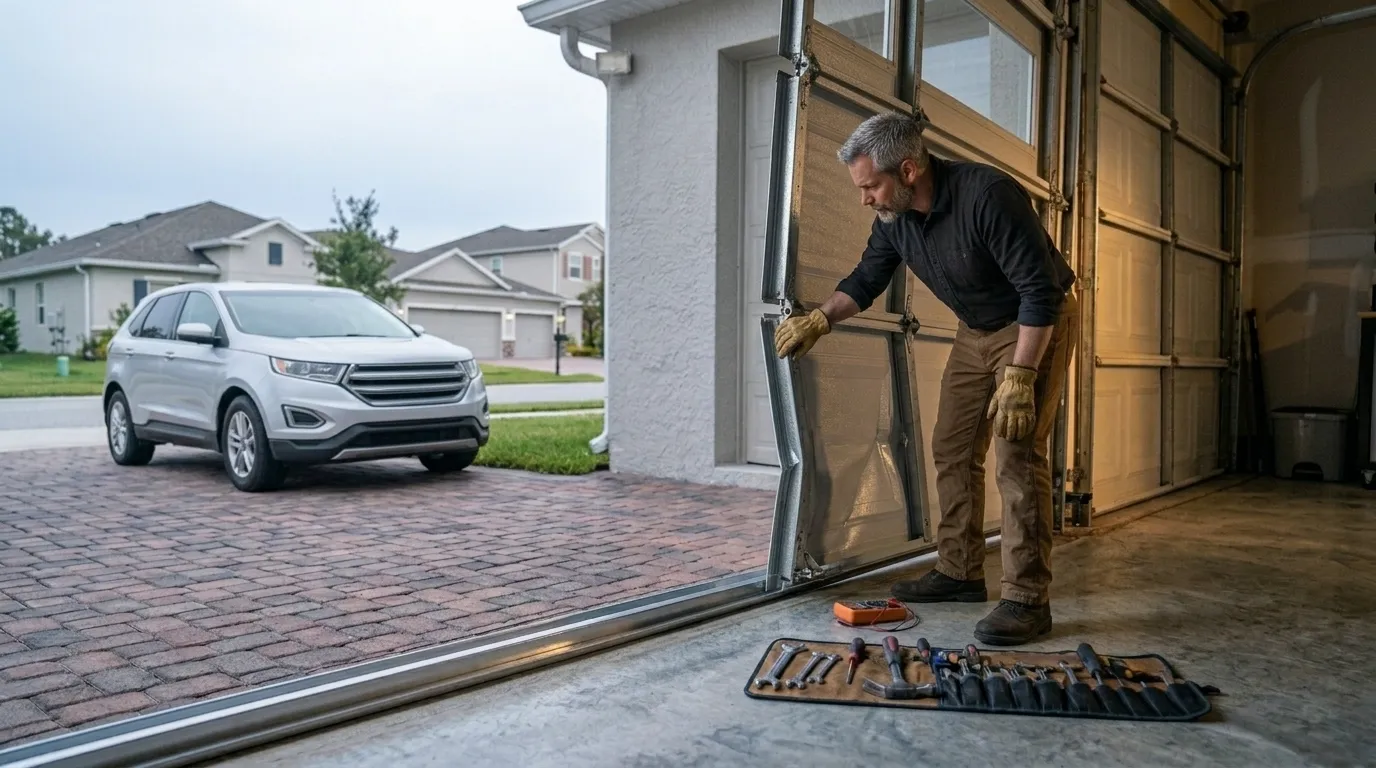
The second pattern is a door that closes but reverses back up partway, which is almost always a misaligned or dirty sensor eye rather than anything mechanical - an easy fix once we're there, and sometimes fixable over the phone before we even load the truck.
Less common but more urgent: a door that simply won't lift, opener humming but nothing moving. That's usually the spring, and if you hear that hum with no motion, shut the opener off at the wall and wait for a truck rather than repeatedly hitting the remote, which just runs the motor against a dead stop.
Talk to a Algonquin Technician First
Describe what the door is doing and get a straight answer on what it likely needs.
Other Garage Door Services in Algonquin
Recent Work in Algonquin
A look at jobs our crew has been on nearby.
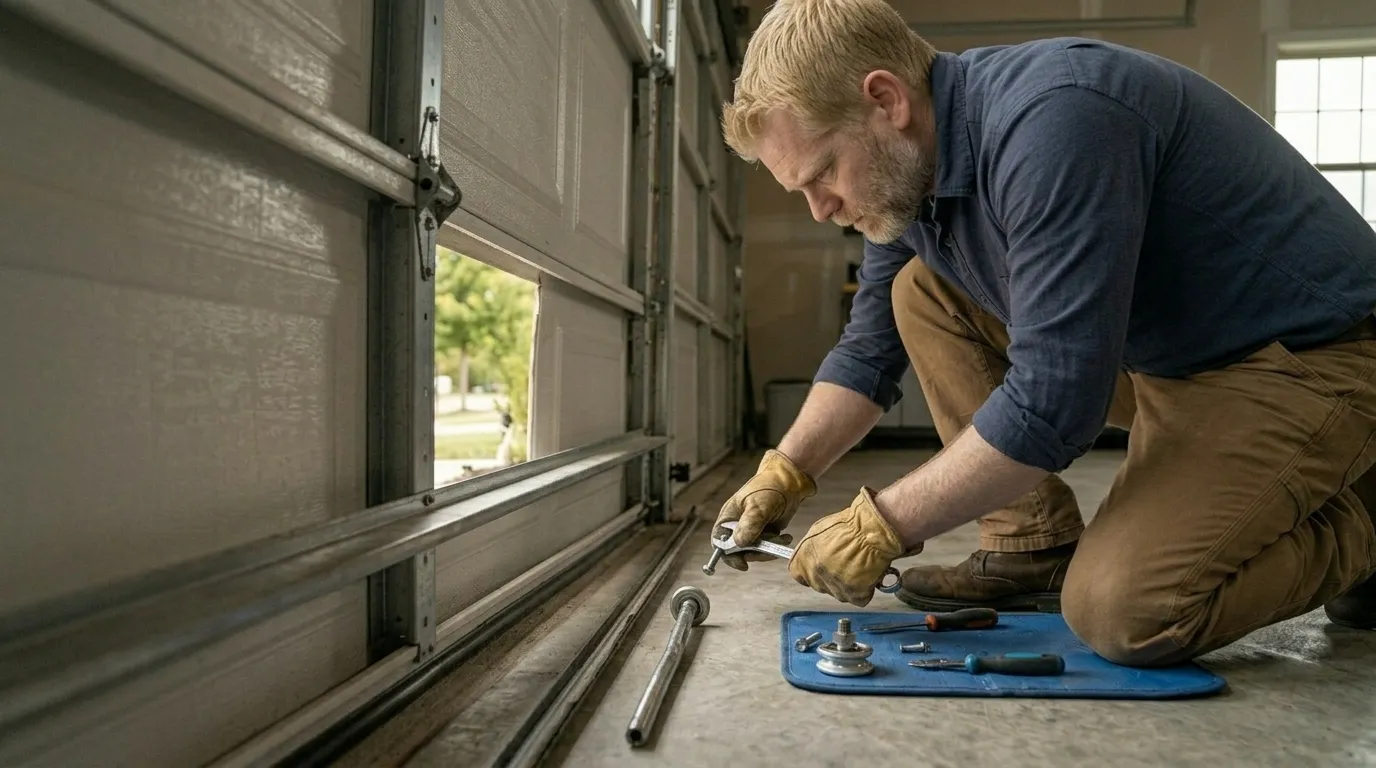
Why Algonquin Calls Us
Frequently Asked Questions
How far out do you come for a repair in Algonquin?
We run out of Buffalo Grove, about 18 miles from Algonquin. That distance is built into how we schedule the day - we're not a branch office down the street, so we ask for a bit more lead time on non-emergency calls than a shop based in town could offer.
Are Algonquin garage doors different from ones in Buffalo Grove?
The hardware era differs. Algonquin's housing centers on 1994, mostly torsion-spring steel doors, while Buffalo Grove's broader stock spans back to 1938. Newer torsion hardware here means parts are usually easier to source than on some older extension-spring setups elsewhere in the service area.
Why does my door make noise but still open fine?
Usually a brittle roller, not the spring. Freeze-thaw cycling in this climate dries out nylon rollers and rubber seals over the years, and a roller that's cracking will grind or scrape well before it actually fails and stops the door from moving.
Can I replace a torsion spring myself?
No. The spring holds enough stored tension to cause serious injury if it releases while you're working on it, regardless of the door's age or size. Sensor alignment and roller lubrication are reasonable DIY tasks; springs and cables are not.
Need Garage Door Repair in Algonquin?
Call now for straight answers on cost and timing.